
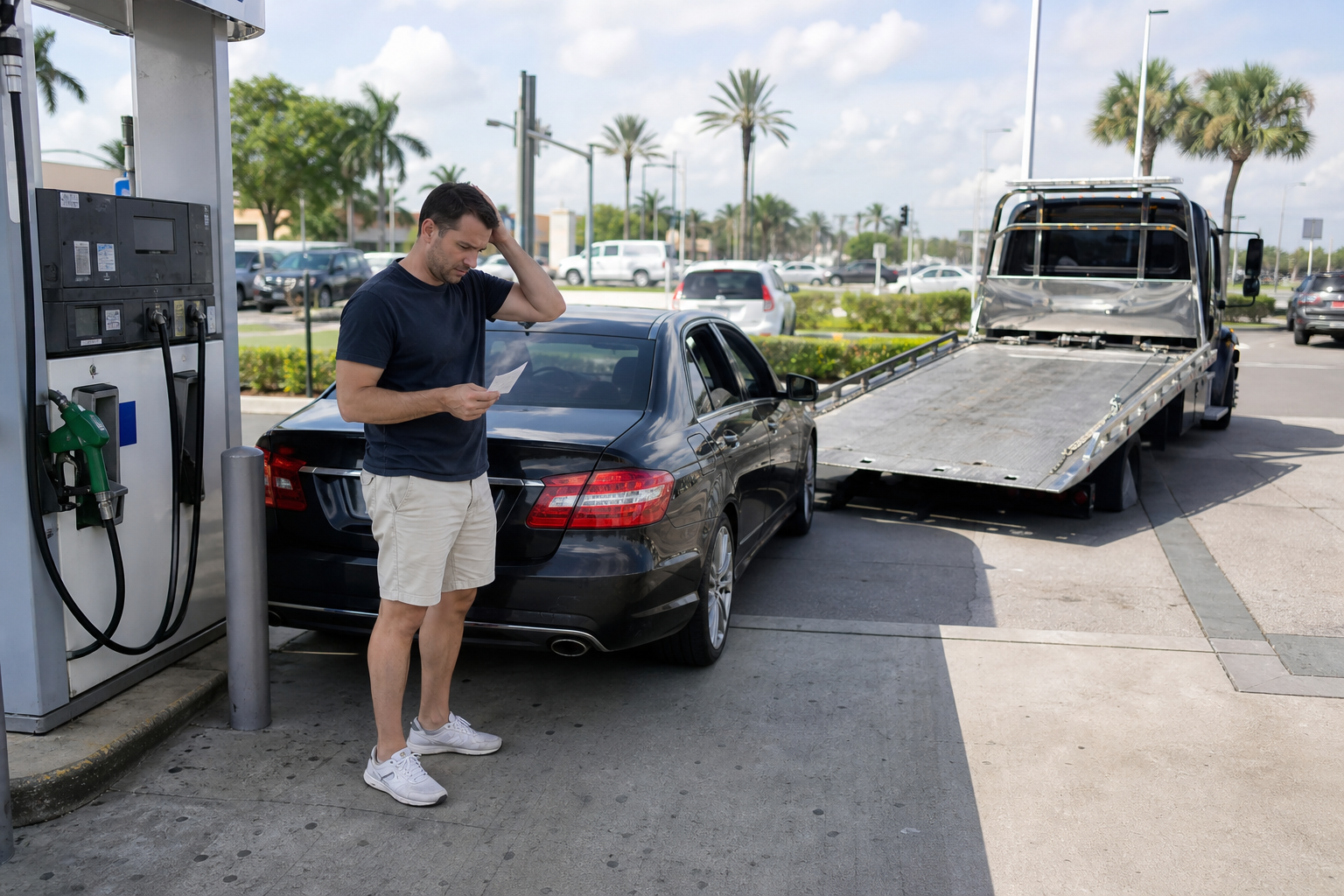
The nozzle is back on the pump, the receipt is in your hand, and then you notice the fuel grade or pump label does not match your vehicle. The engine is still off. That pause may be the most useful thing you do: do not start the engine, press the start button, or turn the key to test what happens.
Immediate action
- Leave the engine off.
- Do not try to dilute the wrong fuel by adding the correct fuel.
- Tell the station attendant that the vehicle cannot be started or moved under its own power.
- Call roadside assistance or towing and identify the wrong-fuel situation clearly.
- If the engine has already run, stop in the safest available place, shut it off, and do not restart it.
Before the problem: make one check before fueling
Wrong-fuel incidents often begin with a familiar motion performed on autopilot. Before squeezing the pump handle, compare the fuel selection with the label inside the fuel door, on the fuel cap, or in the vehicle information supplied by the manufacturer. This brief check is especially useful when driving a recently purchased, borrowed, rented, or shared vehicle.
The two common mix-ups are gasoline added to a diesel vehicle and diesel added to a gasoline vehicle. They do not create identical mechanical problems, but the immediate roadside response is the same: prevent the fuel from being circulated.
A vehicle's fuel system can begin moving fuel when the engine is started. In some vehicles, system activity may also occur as the vehicle is switched into an operating mode. Gasoline can reduce the lubricating qualities expected by components in a diesel fuel system. Diesel in a gasoline vehicle may interfere with combustion and contaminate fuel-delivery or ignition-related components. The extent of the work needed depends on the vehicle, fuel type, amount added, and whether the engine ran.
Do not assume a small amount is harmless, and do not use the remaining tank capacity as a reason to experiment. Adding correct fuel on top of incorrect fuel does not remove the contamination. A qualified service facility should decide how the tank and fuel system need to be handled.
At the roadside: stop the fuel from circulating
If the vehicle is still beside the pump, leave it off and notify the attendant. Explain that it cannot be driven because the wrong fuel was added. Do not push it into an area exposed to moving vehicles unless station staff and the towing operator establish a safe plan.
If you discovered the mistake after starting or driving, do not continue toward home or a repair facility. Signal, move out of an active traffic path if the vehicle can be positioned safely, shut off the engine, and avoid another start. Continuing to run the engine can move contaminated fuel farther through the system.
Traffic exposure matters in West Palm Beach. Use hazard flashers when they improve the stopped vehicle's visibility, remain alert to vehicles entering or leaving the area, and avoid standing in a travel lane. Do not wait directly in front of or behind the disabled vehicle, and never stand between it and an arriving tow truck.
When to call for help
Request professional help whenever the fuel type is wrong or uncertain. This is not the same as running out of fuel: fuel delivery cannot correct a contaminated tank by adding more fuel. Tell the dispatcher that the engine must remain off so the call is handled as a wrong-fuel tow rather than a routine restart or fuel request.
Roadside assistance can help assess the service options, but fuel removal is not available from every roadside provider. When on-site remediation is not offered or appropriate, arrange towing to a qualified facility. A flatbed tow can load the vehicle without requiring it to power itself onto the truck.
Information to give the dispatcher
- Your location and whether you are at a pump, in a parking area, or beside moving traffic.
- The vehicle's make, model, approximate size, and drivetrain information if known.
- The fuel the vehicle requires and the fuel that was added.
- Approximately how much wrong fuel was added and how much fuel was already in the tank.
- Whether the ignition was switched on, the engine was started, or the vehicle was driven.
- Any current warning lights, unusual sounds, smoke, leaking fuel, or strong odor.
If fuel is visibly leaking, there is smoke, or conditions feel immediately unsafe, move away from the vehicle and fuel pumps and alert on-site personnel. Do not attempt to inspect or clean a leak yourself.
While waiting: protect yourself and preserve useful details
Once towing is arranged, resist the urge to recheck the engine. A quick start to move a few feet can change a relatively contained tank problem into a wider fuel-system concern. Leave the key or smart key with you until the towing operator requests it.
Wrong-fuel waiting checklist
- Keep the engine off and do not press the start button.
- Save the fuel receipt or photograph it so the fuel type and amount are available.
- Check the pump selection visually without handling the nozzle again.
- Stay where the driver, station staff, and towing operator can communicate without standing in traffic.
- Keep passengers away from loading activity and moving vehicles.
- Remove essential personal items before loading begins.
- Confirm the intended tow destination with the dispatcher or operator.
- Tell the operator immediately if the engine ran, even for only a few seconds.
Avoid opening fuel lines, inserting a hose into the filler neck, disconnecting the battery, or attempting to siphon fuel. Fuel vapors, spills, unsuitable containers, and roadside traffic make improvised removal unsafe. The towing operator's role is to move the vehicle without starting it; diagnosis and fuel-system cleaning should be left to an appropriate service facility.
After service arrives: load without starting, then correct the contamination
Meet the towing operator from a position where you remain visible without entering the loading path. Start with one direct statement: “The wrong fuel was added, and the engine should not be started.” Then explain whether the ignition was activated or the engine ran.
The operator may need access to the cabin to release the steering, select neutral, or follow a vehicle-specific loading procedure. Let the operator direct this process. Do not start the engine to help with loading. Winching and suitable towing equipment allow the vehicle to be moved without relying on engine power.
At the destination, provide the receipt and the same timeline you gave the dispatcher. The receiving facility may need to drain the tank, evaluate fuel that entered the lines, replace affected filters, or perform other vehicle-specific work. The correct scope cannot be determined solely from the amount shown on the receipt.
Do not restart the vehicle until the facility handling the contamination says it is ready. Before leaving, confirm that the correct fuel has been added and ask whether any follow-up observation is recommended. If you need assistance moving the vehicle in West Palm Beach, a calm handoff begins with a clear request: wrong fuel, engine off, towing needed. Request 24-hour towing and share the details from the checklist above.
Wrong-fuel FAQs
I put gasoline in a diesel vehicle but did not start it. What should I do?
Keep the engine off and arrange professional fuel-system service or towing to a qualified facility. Do not try to dilute the gasoline with diesel. Tell the dispatcher that the vehicle must be loaded without starting.
I started the engine for only a few seconds. Is towing still necessary?
Yes. Shut the engine off and do not restart it. Even brief operation may circulate contaminated fuel. Tell the towing operator and receiving facility exactly what happened so they can determine the appropriate next step.
Can I fill the rest of the tank with the correct fuel?
No. Dilution leaves the wrong fuel in the system and may increase the total volume that must be removed. Leave the vehicle off and seek professional help.
Will a roadside provider drain the tank where the vehicle sits?
Service capabilities vary. Explain the fuel mix-up when calling so the provider can state what is available. If on-site fuel removal is not offered or the location is unsuitable, towing is the practical handoff.
What if I am not certain that I selected the wrong fuel?
Check the receipt, pump selection, and vehicle fuel label without starting the engine. If uncertainty remains, treat it as a wrong-fuel incident and call for guidance. Testing the vehicle by starting it creates unnecessary risk.