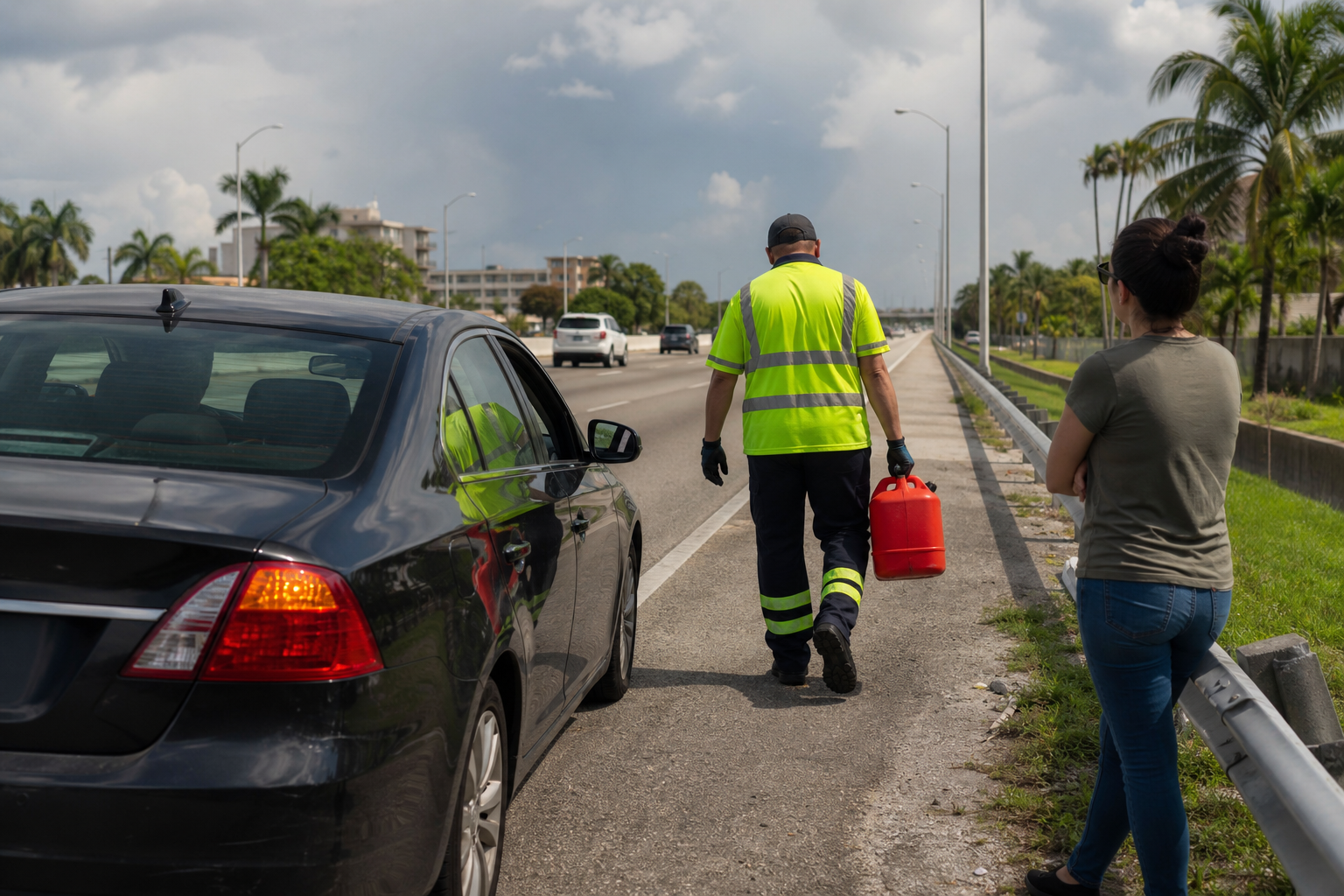
The highest-risk mistake after running out of fuel is trying to push the vehicle, inspect it, or walk beside traffic while drivers are approaching. If the car is stopped in an active lane, do not get out to push it and do not attempt a roadside repair. Turn on the hazard lights if they work, stay alert to traffic, and call emergency dispatch when there is immediate collision danger. Follow the dispatcher’s instructions about remaining belted inside or moving to a protected location.
The first 10 minutes
Minutes 0–2: Decide whether this is a traffic emergency
Look at the vehicle’s position before focusing on the fuel gauge. A car in a travel lane, partly blocking a lane, stopped around a blind approach, or exposed where other drivers may not see it creates an immediate traffic hazard. Call emergency dispatch if a collision appears possible. Do not try to solve that exposure by pushing the car yourself.
If the vehicle is fully outside moving traffic, set the parking brake and keep the hazards on. Choose where occupants wait based on the actual surroundings. Inside with seat belts fastened may be safer in some situations; a protected place away from the roadway may be safer in others. Avoid standing next to the doors or gathering near the trunk.
Minutes 2–5: Make the vehicle easier to locate and see
Confirm the direction the vehicle was traveling and identify a nearby address, business entrance, intersection, or map pin without walking along the road. Note whether the car is in a parking area, on a shoulder, or still exposed to a lane.
Roadside visibility can change quickly in West Palm Beach. Bright glare may make a stopped vehicle harder to distinguish, while heavy rain can reduce sight distance. Keep lights on when the electrical system permits, but do not place warning devices if doing so requires entering or walking close to traffic.
Minutes 5–10: Check the clues without repeatedly restarting
A low or empty gauge, a recent fuel warning, loss of power, and an engine that stopped can point to an empty tank, but those clues are not a diagnosis. Stay out of the engine compartment at an exposed roadside location. If you smell strong fuel, see liquid leaking, notice smoke, or suspect the wrong fuel was added, do not attempt another start or accept a routine refill as the solution.
Avoid repeated cranking. Restart procedures vary by vehicle. Diesel fuel systems may require a specific priming process, and hybrids or other vehicles may have manufacturer-specific instructions. Check the owner’s manual and follow guidance from the assistance provider rather than using a universal restart rule.
Decision points: fuel delivery, relocation, or towing
Use the vehicle’s position and the certainty of the fuel problem to choose the next step:
- Request fuel delivery when the vehicle is in a reasonably safe and reachable place, the fuel type is known, and the symptoms are consistent with an empty tank.
- Request 24-hour towing when the vehicle must be removed from traffic exposure, the fuel type cannot be confirmed, the car received fuel but still cannot be started correctly, or another problem appears likely.
- Contact emergency dispatch first when the stopped vehicle creates an immediate collision hazard. Roadside service does not replace traffic-scene direction in an active-lane emergency.
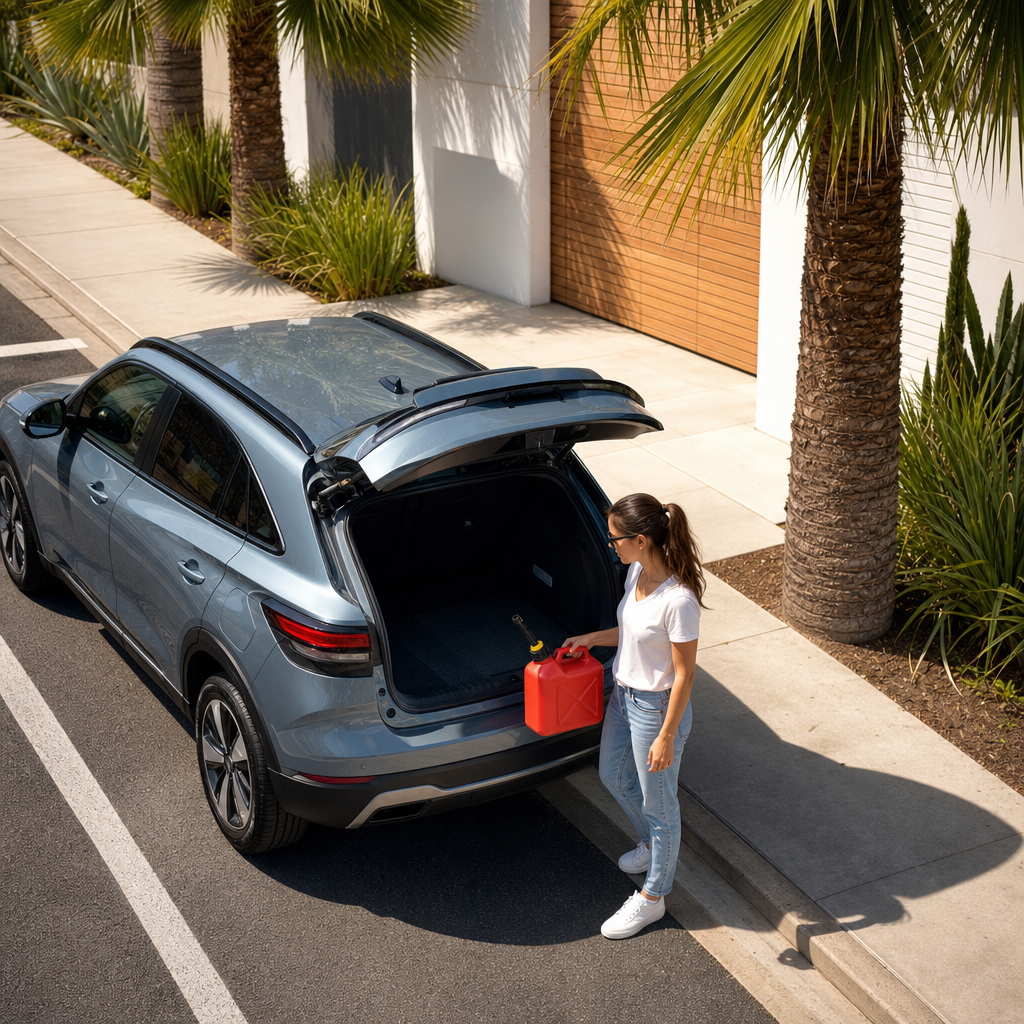
Do not walk to buy fuel if the route requires traveling beside or crossing moving traffic. An unmarked or unsuitable container also creates avoidable handling problems. A roadside provider can bring fuel in an approved container and approach the vehicle with the location information already supplied.
What to report when you call
A clear dispatch report reduces back-and-forth while you are managing a stressful scene. Give the following details in this order:
- Safety position: Say whether the vehicle is fully outside traffic, on a narrow roadside area, partly in a lane, or blocking a lane.
- Exact location: Share a map pin, nearby address, intersection, entrance, and direction of travel when available.
- Vehicle description: Provide the color, make, model, approximate year, and license plate.
- Fuel requirement: State gasoline or diesel and the required grade if known. Do not guess.
- What happened: Explain whether the car lost power while moving, would not restart after being parked, displayed an empty reading, or showed another warning.
- Access conditions: Mention a locked fuel door, unusual fuel-filler location, low-clearance entrance, passengers who need assistance, or severe roadside exposure.
Also report fuel odor, visible leakage, smoke, impact damage, or a possible wrong-fuel event. Those details can change the service plan from a refill to safe vehicle removal.
What roadside help does next
During fuel delivery
The provider will identify the vehicle, assess whether the working area is reasonably accessible, and confirm the fuel requirement before dispensing fuel. Remain in the waiting location you selected unless the provider gives a safer instruction. Keep children and pets secured, and avoid approaching the traffic-facing side of the service vehicle.
After fuel is added, use the restart procedure specified by the owner’s manual or provider. Do not continue cranking if the vehicle fails to start, starts and stalls, displays a serious warning, or behaves differently from a straightforward empty-tank event. At that point, the provider can help coordinate the appropriate next service through roadside assistance.
If towing is the safer next step
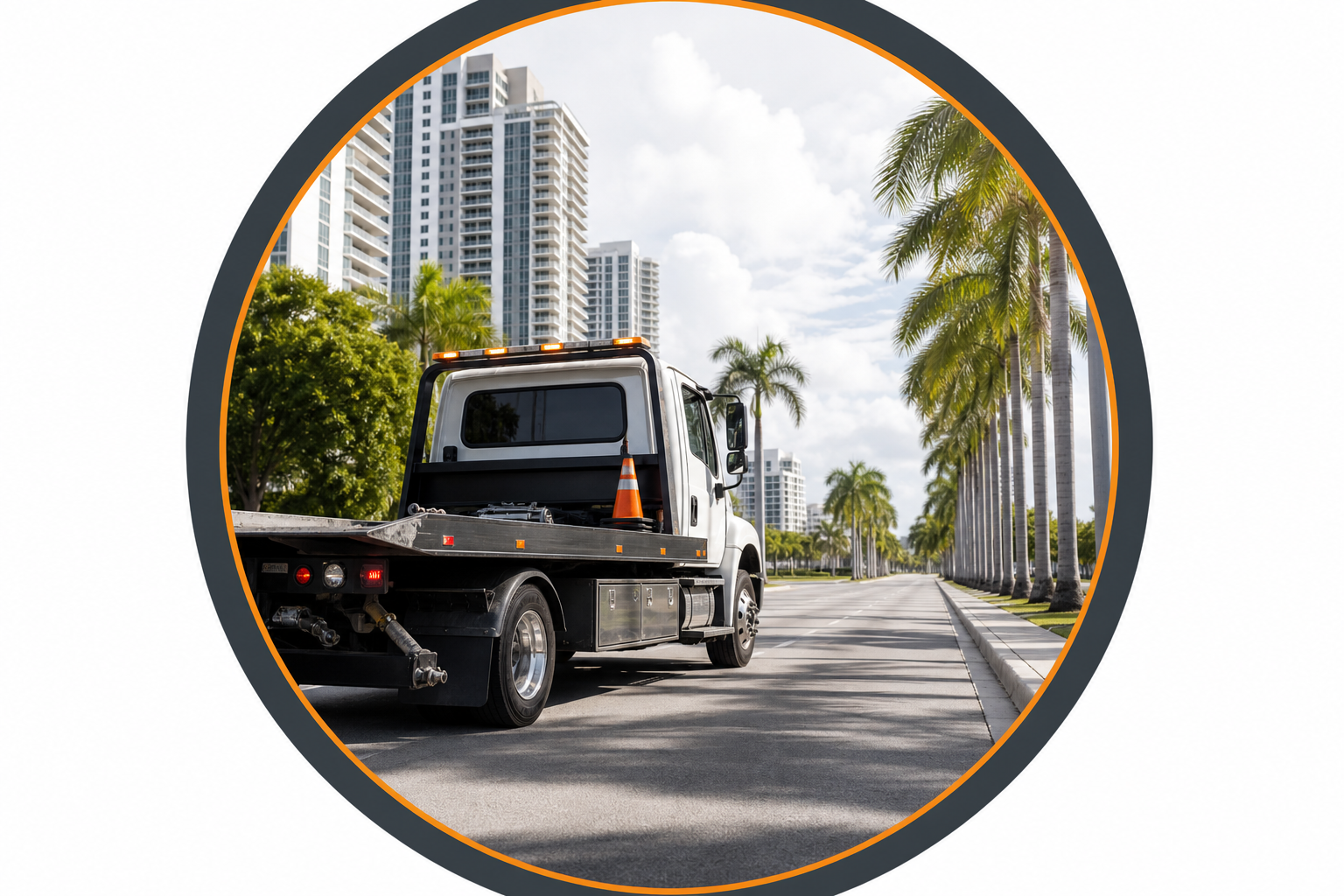
The towing handoff begins with confirming where the vehicle can be loaded and where it needs to go. Tell dispatch if steering, braking, wheel movement, or access to the keys is limited. The operator determines the suitable loading method based on the vehicle and scene rather than assuming every out-of-fuel call can be resolved at the roadside.
Remove only essential belongings when it is safe to do so. Do not stand between the disabled car and the tow truck, and do not enter the roadway to guide traffic. Follow the operator’s instructions while the vehicle is prepared and loaded.
After the vehicle is moving again
Before leaving, check that the fuel cap is secured and that no warning requires attention under the owner’s manual. Drive directly to a suitable fuel station if only a limited amount was delivered. If the engine runs poorly, stalls again, or shows a serious warning, move out of traffic when possible and request assistance rather than trying repeated restarts.
Roadside handoff checklist
- Hazard lights on, if operational
- Occupants positioned away from traffic exposure
- Map pin and direction of travel ready
- Vehicle description and plate ready
- Correct fuel type confirmed—not guessed
- Fuel odor, leakage, warnings, or wrong-fuel concern reported
- Phone kept available for provider updates
Frequently asked questions
Should I leave the car to find a gas station?
Not if doing so means walking beside or crossing traffic, leaving passengers in an exposed vehicle, or carrying fuel in an unsuitable container. Request delivery to the vehicle instead.
Should I stay inside if the car is in an active lane?
There is no single safe answer for every scene. Call emergency dispatch when a collision threat is immediate and follow instructions about remaining belted inside or exiting toward a protected location. Do not get out to push the car.
Can I keep trying to start the engine?
Avoid repeated attempts. Diesel, hybrid, and other vehicle systems may require specific procedures after fuel depletion. Follow the owner’s manual and the provider’s guidance.
What if I am not sure the car is actually out of fuel?
Report the gauge reading, warning lights, sounds, and sequence of events without declaring a diagnosis. Roadside dispatch can use those details to plan appropriate assistance.
What if the wrong fuel was added?
Do not start the vehicle. If it is already running, stop when safely positioned and report the wrong-fuel concern. Towing is generally the appropriate service handoff rather than adding more fuel or repeatedly restarting.
Need help now? Share your safety position, map location, vehicle description, and confirmed fuel type. A roadside provider can then arrange the calmest suitable handoff for your West Palm Beach location.