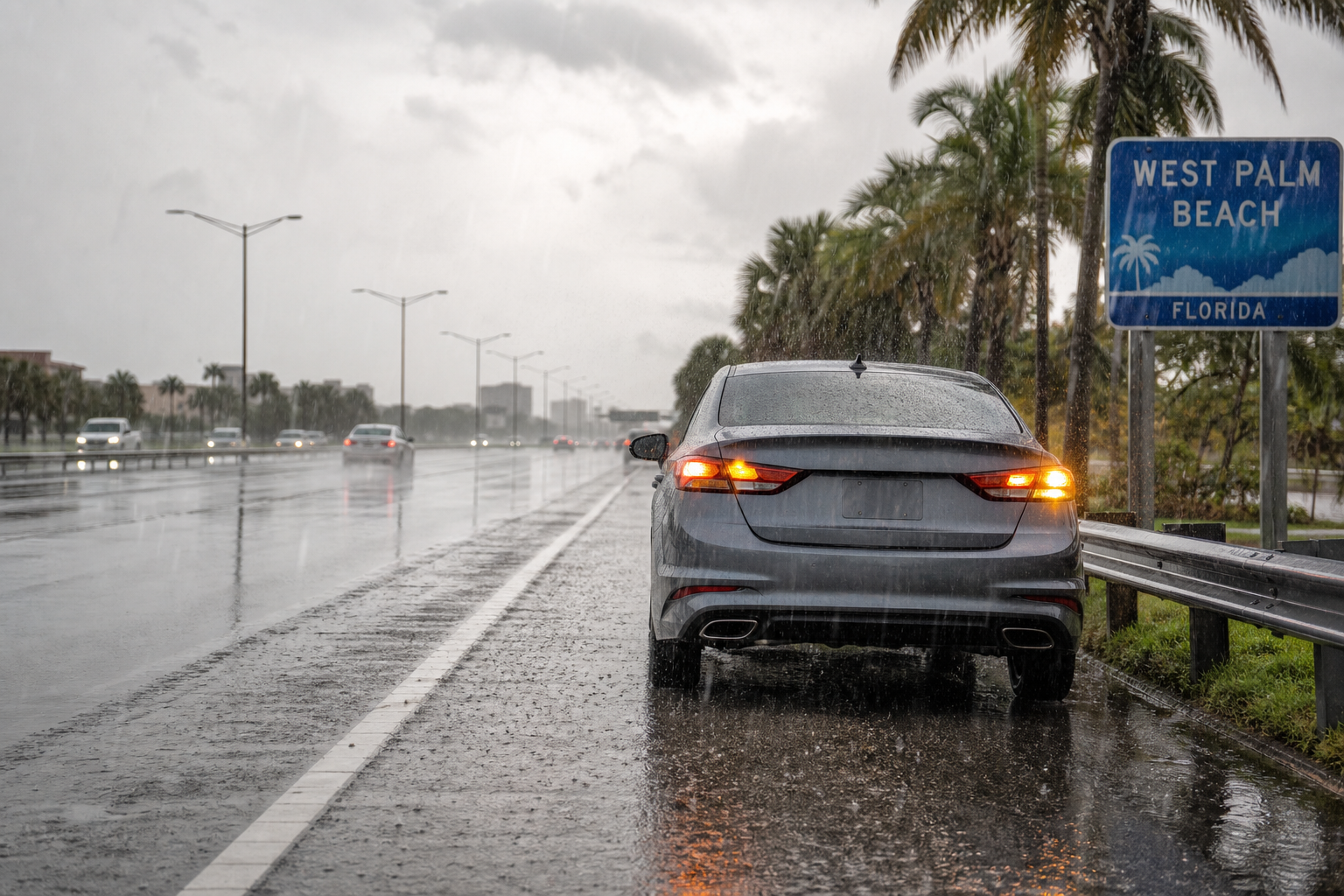
A sudden Florida downpour can turn an ordinary drive through West Palm Beach into a stressful situation in minutes. Heavy rain reduces visibility, overwhelms some low-lying road areas, and can expose an existing battery, electrical, ignition, or fuel-system problem. If your vehicle stalls, the priority is not restarting it immediately. Your first job is to get yourself and your passengers out of danger.
Immediate actions: protect yourself first
- Turn on your hazard lights right away.
- If the vehicle is still moving, steer calmly toward a shoulder, parking lot, or other safe area away from traffic.
- Do not try to drive through standing water or restart a vehicle that stalled in water.
- Stay inside with seat belts fastened if traffic is moving nearby and exiting would put you in danger.
- Call 911 if you are in immediate danger, trapped by rising water, injured, or stopped in an active travel lane where you cannot get to safety.
- Once you are safely positioned, arrange roadside assistance or 24-hour towing.
Move out of traffic if you can do so safely
If the engine has stalled but the vehicle still has momentum, use it to get out of the travel lane. Avoid abrupt steering, braking, or lane changes; rain-slick pavement can reduce traction. Signal if possible, turn on your hazards, and aim for the nearest safe shoulder, paved lot, side street, or other location away from moving vehicles.
On major West Palm Beach routes such as I-95, Florida's Turnpike, Okeechobee Boulevard, or Southern Boulevard, stopping in a travel lane can be especially hazardous during low-visibility rain. If you cannot safely reach a shoulder or other refuge, keep your hazard lights on, remain belted, and call 911. Do not stand beside the vehicle or attempt to direct traffic.
Once stopped, shift into park, set the parking brake if conditions allow, and keep the doors locked. If you have reflective triangles or a roadside safety kit, use them only when it is safe to exit and you can place them without walking near fast-moving traffic. In many storm conditions, staying in the vehicle is safer than trying to set up equipment along a busy roadway.
Do not drive into standing water
Florida rain can collect quickly around intersections, underpasses, curb lanes, parking-lot entrances, and low areas of the road. Water depth is difficult to judge in a downpour, especially at night. A puddle that looks passable may be deep enough to enter the engine intake, affect electrical components, hide a pothole, or cause the vehicle to lose traction.
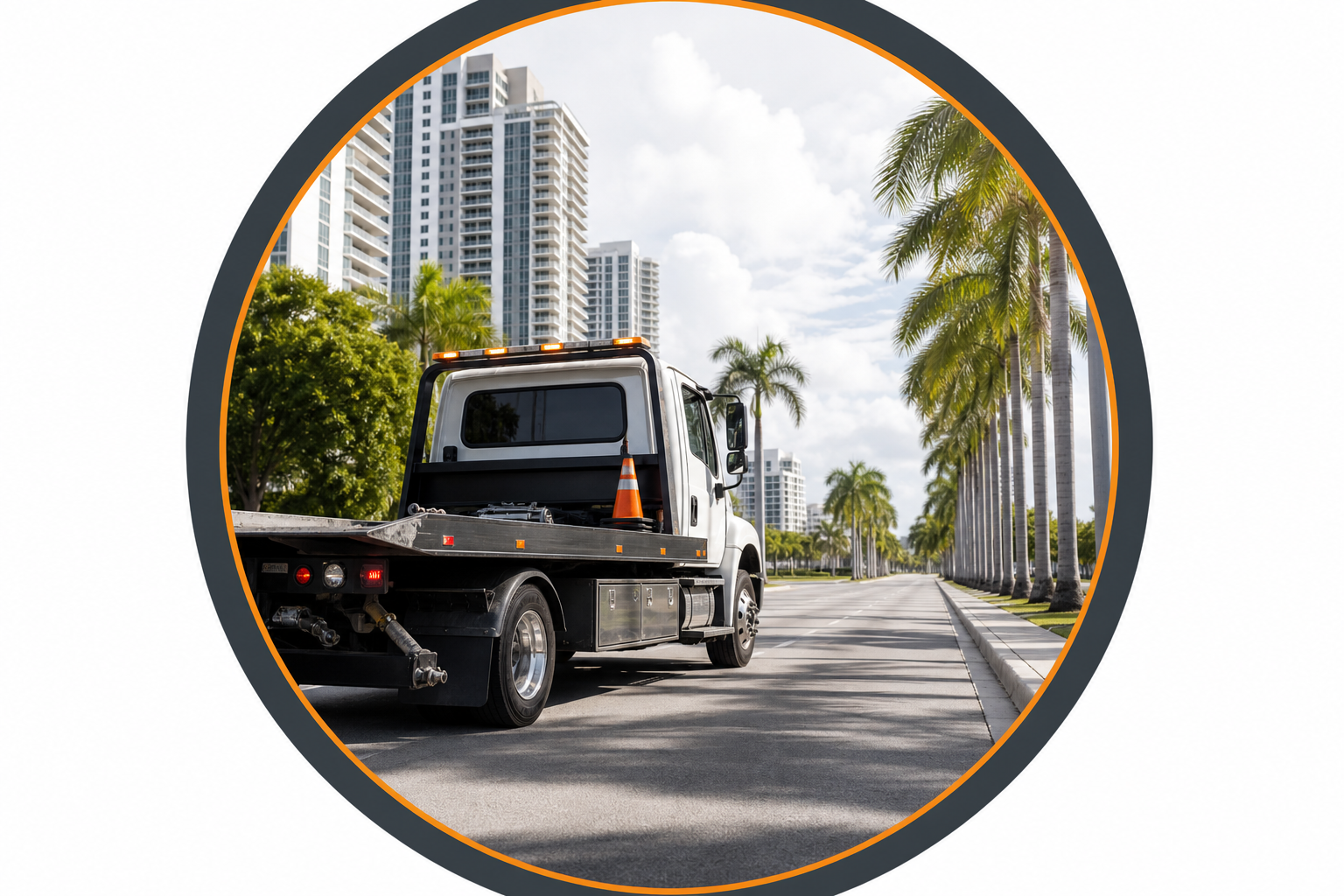
If your vehicle stalled after entering water, do not keep cranking the engine. Repeated restart attempts can make some water-related engine damage worse. Turn off the ignition, avoid opening the hood near standing water, and arrange a tow. A flatbed tow is often a sensible option when a vehicle has stalled in water or the cause is uncertain, because it keeps all four wheels off the roadway during transport.
If water is rising around the vehicle
Your safety takes priority over the vehicle. Call 911 if you are trapped, water is entering the cabin, or conditions are worsening quickly. If leaving the vehicle is clearly safer and you can reach higher ground without entering moving water or traffic, do so. Never walk or drive through moving floodwater. Avoid touching exposed wiring, downed lines, or electrical equipment.
Try only a few safe, simple checks
After you are safely out of traffic and away from standing water, a few observations can help determine whether roadside help may be enough. Do not attempt repairs in heavy rain, on a narrow shoulder, or anywhere you feel exposed to traffic.
- Check the dashboard: Note warning lights, especially battery, temperature, oil-pressure, or check-engine warnings. Share what you see when requesting assistance.
- Confirm the gear position: Make sure the vehicle is fully in park before attempting one restart.
- Listen for clues: A rapid clicking sound may suggest a weak battery connection or battery issue. Silence, a single click, or cranking without starting can point to different problems, but it is best not to diagnose from the roadside.
- Look for obvious hazards from inside: Steam, smoke, a strong burning smell, or fluid leaking beneath the vehicle are reasons to stop trying to restart it and request a tow.
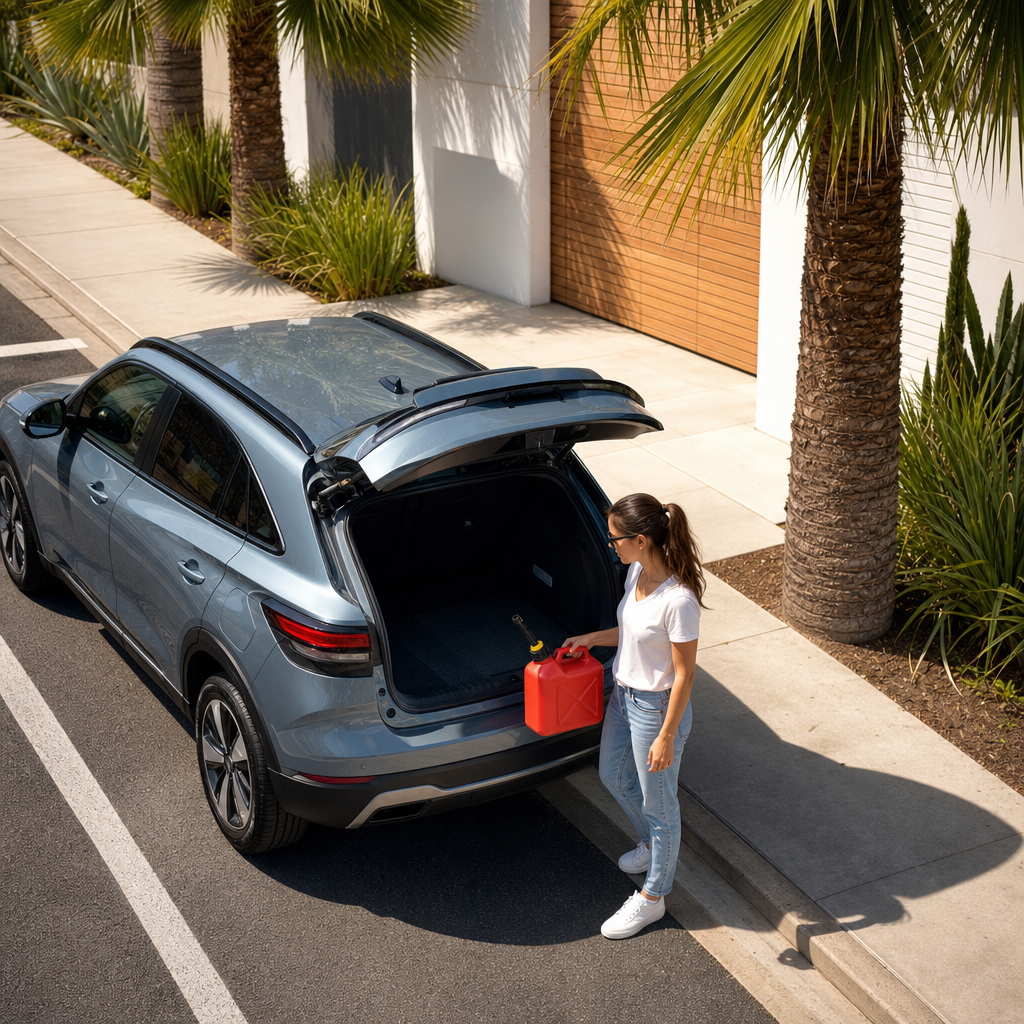
- Consider fuel level: If you may be out of fuel and are safely parked, fuel delivery may help. Do not walk along a busy road to get fuel during a storm.
Limit restart attempts. If the engine does not start after one or two brief, safe attempts, stop. Constant cranking can drain the battery and may complicate an already wet electrical or engine-related issue.
When roadside assistance may be appropriate
Roadside assistance can be a good fit when the vehicle is safely off the road, has not entered deep water, and the issue appears straightforward. For example, a technician may be able to help with a weak battery, a loose connection, an empty fuel tank, or a flat tire that occurred while you pulled over.
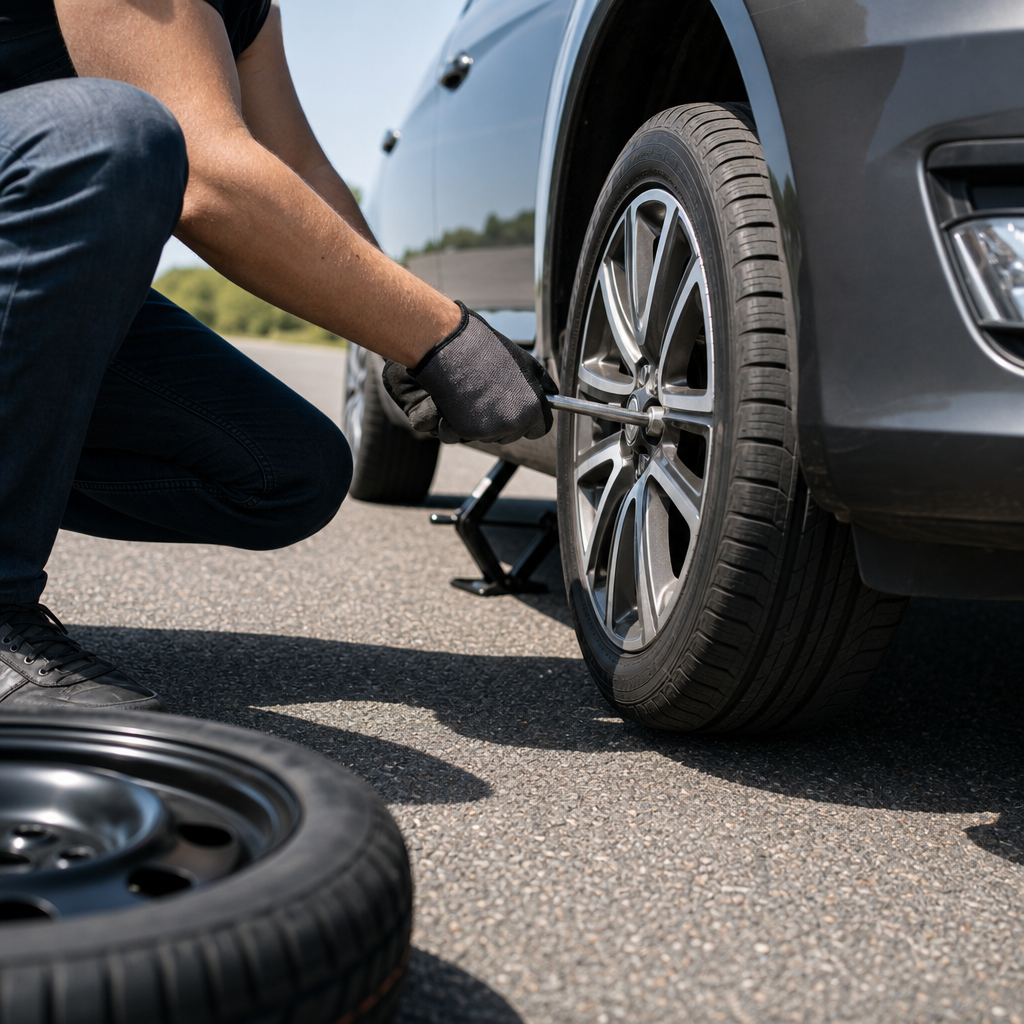
If a tire is flat, do not attempt a tire change beside high-speed traffic or in a flooded shoulder. Request flat tire service instead. Rain makes pavement slippery, reduces visibility for passing drivers, and can make it harder to safely handle a jack and tools.
When you call, provide your exact location, travel direction, nearby cross streets or landmarks, the vehicle make and model, and whether it is safely off the roadway. Let the dispatcher know if you are near a major route, in a parking garage, blocked by water, or unable to restart after driving through standing water.
When to call for a tow instead
A tow is usually the safer choice when the vehicle cannot be started reliably, was exposed to significant water, has warning lights or overheating signs, or is positioned where roadside work would be unsafe. Request towing rather than a jump-start or minor roadside service when any of the following applies:
- The engine stalled in standing water or shortly after driving through water.
- You see steam, smoke, leaking fluid, or smell burning material.
- The temperature warning light is on or the vehicle appears to be overheating.
- The vehicle is disabled on a busy road, narrow shoulder, ramp, bridge, or other unsafe location.
- The engine starts but runs roughly, stalls again, or displays multiple warning lights.
- A tire, wheel, or underbody appears damaged after contacting a hidden road hazard.
- You do not feel confident that the vehicle can travel safely in continuing rain.
For storm-related breakdowns, explain the circumstances clearly: whether the car stalled before or after water exposure, whether it will crank, and whether it is parked on dry pavement. This helps the towing provider prepare the right equipment and recommend the safest approach.
What to keep in your vehicle for rainy-season breakdowns
You do not need a large emergency kit to be better prepared. A few basic items can make a stalled-vehicle wait safer and less stressful during South Florida rain.
- Charged phone and vehicle charging cable
- Flashlight with fresh batteries
- Reflective vest or reflective warning triangles
- Compact umbrella or rain poncho
- Drinking water
- Paper towel or small microfiber cloth for fogged windows
- Your roadside-assistance and towing contact information
Before hurricane-season rains and summer thunderstorms become routine, make sure your phone is charged before longer trips and keep enough fuel to avoid an unnecessary stop during severe weather. If forecasts call for intense rain, give yourself extra time and avoid routes known to have visible standing water.
Quick checklist while waiting for help
- Hazards on; headlights on if visibility is poor and the vehicle has power.
- Parked as far from moving traffic as safely possible.
- Seat belts fastened while waiting near traffic.
- Doors locked and valuables out of sight.
- No repeated attempts to start a vehicle that stalled in water.
- Location, vehicle details, and symptoms ready for the dispatcher.
- Phone battery conserved while monitoring weather and service updates.
Frequently asked questions
Should I restart my car after it stalls in heavy rain?
If the vehicle stalled without entering standing water and you are safely parked, one or two brief restart attempts may be reasonable. If it stalled in water, do not keep trying to start it. Turn it off and request towing.
Can roadside assistance jump-start a vehicle in the rain?
A trained roadside provider can assess whether conditions are safe for service. If there is standing water, lightning nearby, heavy traffic exposure, damaged wiring, or signs of a more serious problem, towing may be the safer recommendation.
What if my vehicle stalls on I-95 or another major road in West Palm Beach?
Turn on hazards, move to a shoulder only if you can do so safely, stay belted inside if traffic is close, and call 911 if you are blocking traffic or cannot reach a safe position. Then contact 24-hour towing service for help with the disabled vehicle.
Does a stalled vehicle always need a flatbed?
Not always. The appropriate tow method depends on the vehicle, its condition, and where it is located. A flatbed is commonly preferred when a vehicle has water exposure, cannot be safely driven, or needs all wheels carried off the ground.
What information should I give the towing company?
Provide your exact location, direction of travel, vehicle make and model, whether the vehicle is in a safe place, whether it went through water, and whether it starts, cranks, overheats, or has warning lights. Clear information helps the provider plan safe service.