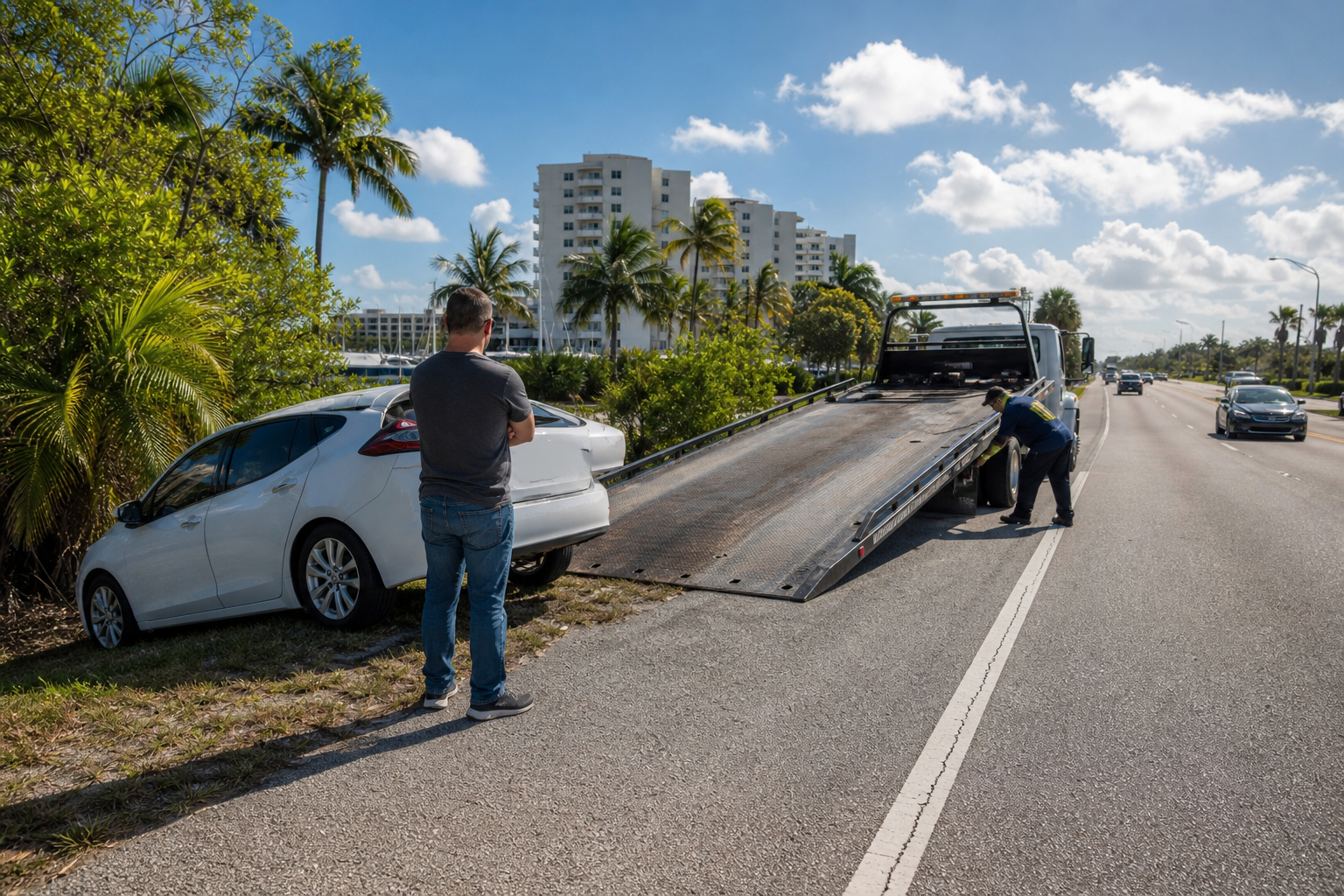
Quick answer: Do not drive if the vehicle fails either of these tests: Can you control it normally? and can it move without signs of active damage? If steering, braking, tires, temperature, fluid containment, visibility, or ground clearance is uncertain, stop and request towing.
Do this before making the decision
- Move out of active traffic only if the vehicle can be moved safely.
- Turn on the hazard lights.
- Set the parking brake after stopping.
- Stay away from moving traffic. If leaving the vehicle would expose you to traffic, remain belted inside when that is the safer option.
- Do not stand in front of, behind, or underneath the disabled vehicle.
If the vehicle is creating an immediate traffic danger or anyone is injured, contact emergency services first.
The two-test decision
Test 1: Can you control the vehicle normally?
A vehicle fails the control test if the brake pedal feels different, steering is unusually heavy or loose, the car pulls sharply, a wheel appears out of position, or you cannot see well enough to drive. These symptoms can become more severe once the vehicle starts moving.
Test 2: Can it move without causing more damage?
A vehicle fails the damage test if it is overheating, leaking fluid, scraping the ground, riding on a flat or damaged tire, producing smoke, making severe grinding or knocking sounds, or showing damage near a wheel. Shut the engine off if continued operation could worsen the condition.
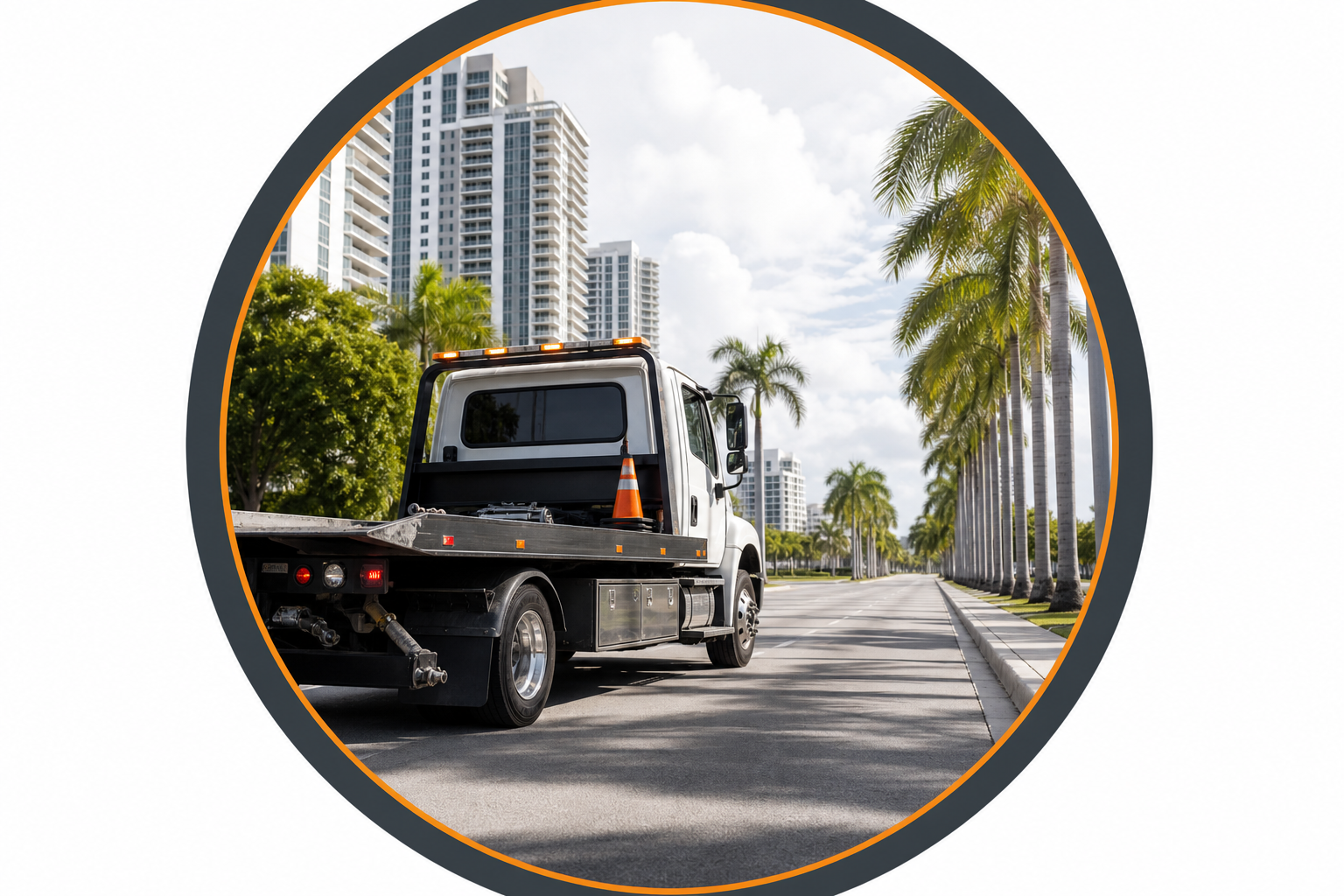
If either answer is “no” or “not sure,” choose 24-hour towing rather than testing the vehicle on West Palm Beach streets. A towing provider can recommend an appropriate response from the symptoms you report, but no one can confirm mechanical safety remotely.
Drive, request roadside help, or tow?
| What you observe | Do | Don’t |
|---|---|---|
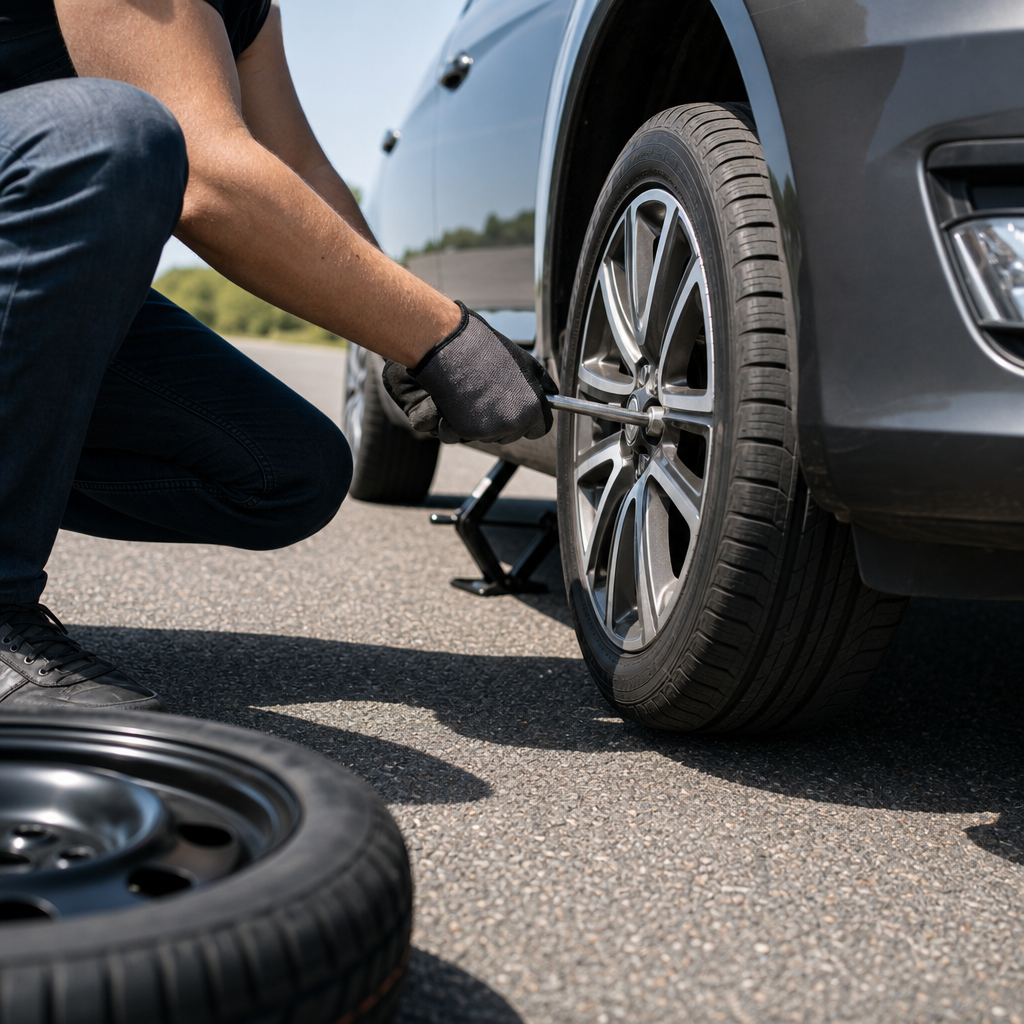
| Flat tire with a usable spare, stable lifting surface, and no visible wheel damage | Request flat tire service if you cannot safely change it | Drive on the flat tire |
| Flat tire without a usable spare, or damage to the wheel or suspension area | Request a tow | Assume inflating the tire makes it roadworthy |
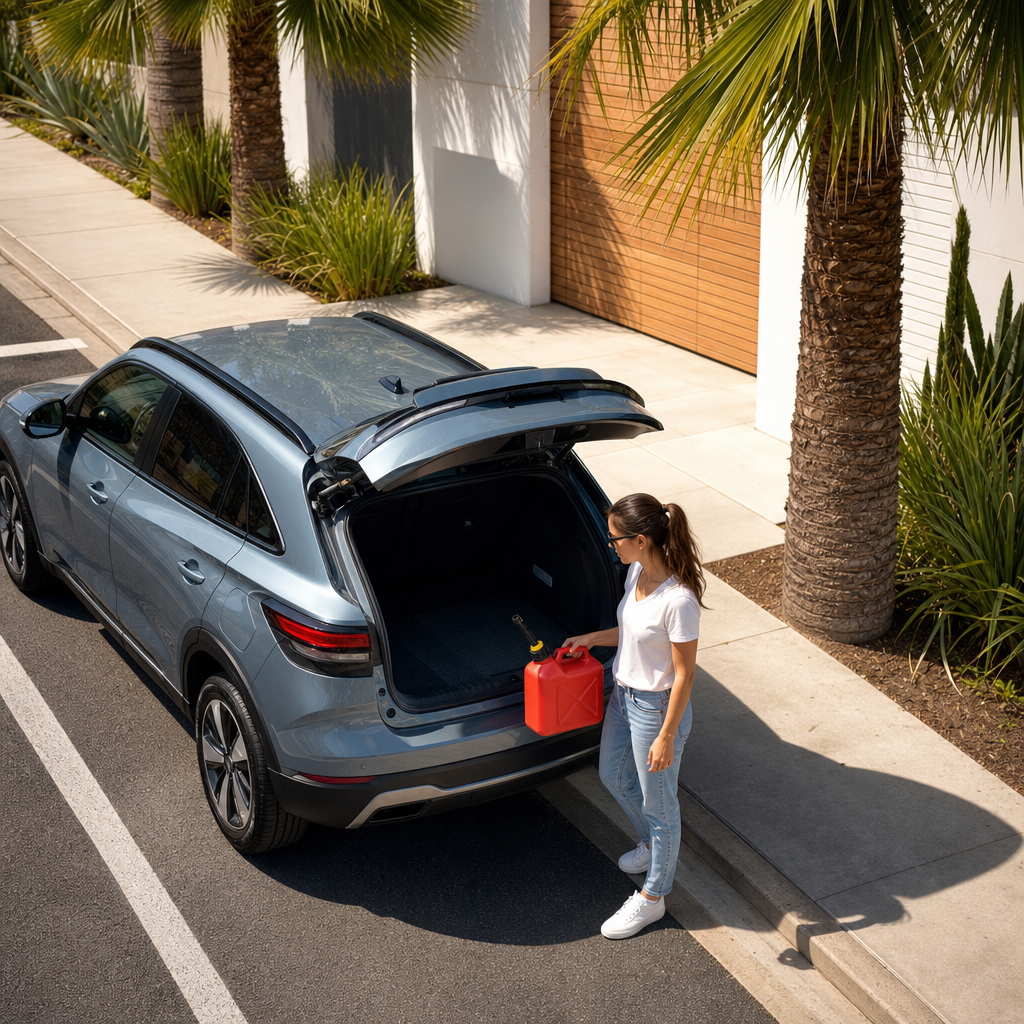
| Vehicle ran out of fuel but has no other warning signs | Request fuel delivery | Walk alongside traffic to find fuel |
| Engine will not start, but the vehicle is safely parked | Describe the sounds, dashboard lights, and recent symptoms when calling | Repeatedly crank the engine or guess that a jump-start will solve it |
| High temperature warning, steam, smoke, or a strong burning smell | Shut off the engine and arrange towing | Open a hot cooling system or continue driving |
| Soft brake pedal, weak braking, steering change, severe vibration, or wheel damage | Arrange towing | Attempt a short drive to see if it improves |
| Loose body panel, dragging part, or vehicle sitting unusually low | Ask whether flatbed towing is suitable | Pull off loose parts or crawl under the vehicle |
| Warning light with no change in handling, sound, smell, or temperature | Stop safely and check the owner’s manual before deciding | Ignore a flashing warning or combine it with other symptoms |
What to do after deciding not to drive
- Secure the stop. Put the transmission in park, apply the parking brake, shut off the engine when appropriate, and keep hazard lights on.
- Identify the location precisely. Tell the dispatcher you are in West Palm Beach, Florida. Provide the street address or nearest posted address, the property or business name if visible, your direction of travel, and which side of the street or lot you occupy.
- Explain access before the truck arrives. Mention a gated entrance, parking garage, low clearance, narrow driveway, locked lot, soft shoulder, blocked wheel, or any position that may complicate loading. If inside a garage, report the posted clearance without estimating it.
- Describe symptoms rather than diagnosing the problem. Useful details include where fluid appears, which tire is affected, whether the vehicle starts, whether it rolls, and what changed immediately before you stopped.
- Give complete vehicle information. Share the color, make, model, approximate size, and whether it is all-wheel drive, lowered, heavily loaded, or unable to shift into neutral. Report visible underside, wheel, or body damage.
- Confirm a safe meeting point. State where you will wait and how the operator can identify the vehicle. Keep your phone available in case access or location details need clarification.
Dispatcher-ready checklist
- West Palm Beach, Florida, plus an exact address or clearly posted location
- Direction of travel and side of the street, driveway, garage, or parking area
- Vehicle color, make, model, and drivetrain if known
- Whether the vehicle starts, steers, rolls, brakes, and shifts into neutral
- Flat tire, leaking fluid, smoke, heat warning, collision damage, or dragging parts
- Garage clearance, gate instructions, tight access, or other loading obstacles
- A safe callback number and your waiting location
Frequently asked questions
What should I do if the vehicle stops in an active traffic lane?
Use hazard lights immediately. Move the vehicle only if it still responds normally and a clearly safer space is reachable without forcing it through a serious mechanical problem. If it cannot move, stay belted when exiting would place you near traffic, and contact emergency services if the stopped vehicle presents an immediate danger. Tell the towing dispatcher that the vehicle is in an active lane.
How can I share my location if I do not know the address?
Use your phone’s map to identify the displayed street or nearby posted address. Add your direction of travel, side of the street, and visible entrance or property name. A dropped map pin can help, but send a written location description too; pins may land on the wrong entrance or opposite side.
Can roadside assistance decide if my vehicle is safe to drive?
A provider can suggest towing or a roadside service based on what you report. The dispatcher cannot inspect steering, braking, tire structure, or hidden damage over the phone. If the symptoms are uncertain or involve vehicle control, request towing.
Should I try moving the car before the tow truck arrives?
Not unless the dispatcher or operator requests it and the vehicle can move safely. Leave it parked if a tire is off the rim, a wheel is displaced, fluid is escaping, parts are dragging, or steering and braking are unreliable.
Do I need a flatbed tow?
A flatbed may be appropriate for wheel damage, low ground clearance, drivetrain concerns, or a vehicle that should not roll during transport. Report the vehicle configuration and visible damage so the provider can recommend equipment.
Still uncertain? Treat uncertainty as a failed safety test
Do not make a trial drive to confirm a braking, steering, overheating, tire, or undercarriage problem. Stop in the safest available position, gather the location and access details above, and call for towing or roadside assistance in West Palm Beach.