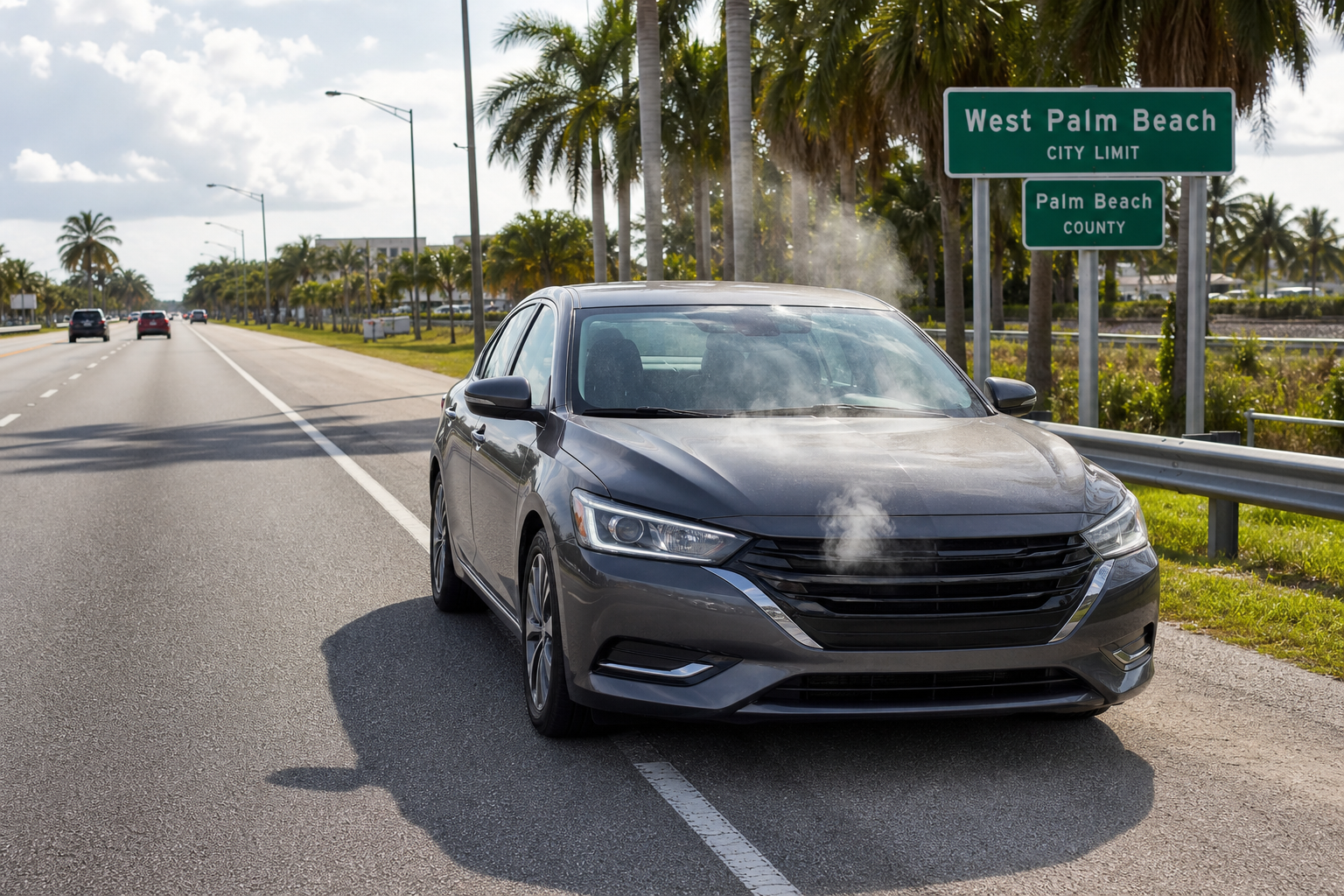
Steam or smoke from under the hood can turn an ordinary drive into a stressful roadside situation in seconds. In West Palm Beach, high temperatures, stop-and-go traffic, sudden rain, and long stretches on I-95 or Florida's Turnpike can put extra strain on a vehicle that already has a cooling-system, electrical, or fluid-leak problem.
The safest response is not to diagnose the vehicle at the roadside. Your job is to protect yourself, get out of traffic if you can do so safely, and avoid making a hot-engine problem worse. If you are uncertain whether you are seeing smoke or steam, treat it as a potentially serious issue and arrange help.
First, Get to a Safer Stopping Place
If you notice a temperature warning, a rising temperature gauge, a sweet smell, a burning odor, or vapor coming from the front of the vehicle, start planning your stop immediately. Do not wait to see whether the problem disappears.
On busy roads such as Okeechobee Boulevard, Southern Boulevard, or major highway ramps, the nearest safe option may be an exit, parking lot, or service road rather than the narrowest available shoulder. Avoid sudden lane changes. Signal early, slow smoothly, and keep a close watch on traffic around you.
Once stopped, put the transmission in park, apply the parking brake, turn on hazard lights, and shut off the engine. A vehicle that is overheating can sustain greater damage if it continues to run. If the vehicle loses power, steering assistance, or braking response while you are trying to pull over, focus on controlling the vehicle and getting clear of moving traffic.
If You Cannot Safely Exit the Vehicle
Stay belted in with the doors locked if traffic is passing closely and there is no safe place to stand. Call for assistance and describe your location as precisely as possible: the road name, travel direction, nearby cross street, exit number, landmark, or business. A location such as “eastbound near the Palm Beach Lakes Boulevard exit” is more useful than simply saying “on I-95.”
Steam and Smoke Can Look Similar—But Both Deserve Caution
From a driver's seat, it is often impossible to identify the source with certainty. White vapor may be coolant steam, while gray, blue, or darker smoke may point to oil, electrical wiring, belts, or another fluid reaching a hot component. Wind, rain, and glare can also make the appearance misleading.
- White vapor or steam
- Often associated with overheating or a coolant leak. It may have a slightly sweet odor. Do not open a hot cooling system or add coolant while the engine is hot.
- Blue-gray smoke
- Can indicate oil reaching a hot engine surface or being burned. Shut the engine off and avoid restarting it until the vehicle has been assessed.
- Dark smoke with a sharp burning smell
- May involve electrical components, rubber, belts, or other materials. Keep your distance from the vehicle and seek immediate help if smoke increases.
- Smoke after driving through standing water
- Water contacting hot components can create temporary steam, but it is still wise to stop and verify that no warning lights, odors, leaks, or temperature issues are present before continuing.
You do not need to decide which category applies before requesting assistance. The more important question is whether the vehicle can be driven without creating a safety risk or causing further damage. When there is visible vapor or smoke plus a warning light, fluid leak, reduced performance, or a high temperature reading, towing is usually the prudent next step.
What Not to Do While the Engine Is Hot
Many roadside injuries and vehicle problems happen after the driver has already pulled over. Heat and pressure remain under the hood for a while after shutdown, so give the vehicle time and avoid quick fixes.
- Do not remove the radiator cap. Pressurized hot coolant can spray out unexpectedly.
- Do not open a coolant reservoir cap on a hot engine. Even a plastic reservoir can be hot and pressurized.
- Do not pour cold water onto a hot engine. This is not a reliable repair and may create additional problems.
- Do not keep restarting the vehicle to “check it.” Repeated starts may worsen overheating, an oil leak, or an electrical fault.
- Do not put your hands near belts, fans, or pulleys. Some cooling fans can engage unexpectedly.
- Do not drive to the next shop simply because the steam stops. A temporary pause in visible vapor does not mean the underlying problem is gone.
If you are waiting for assistance, stay in a safe location, keep children and passengers away from the front of the vehicle, and have your phone charged if possible. If rain begins, do not open the hood just to investigate; the key information for a towing provider is your location, vehicle type, and the symptoms you observed.
A Simple Decision Guide: Wait, Get Roadside Help, or Tow?
Wait and observe only when the situation is clearly low-risk
After you are safely parked with the engine off, it is reasonable to wait for the engine bay to cool before making any decisions. Waiting does not mean continuing your trip. It means giving hot components time to cool while you assess whether there are obvious warning signs such as a puddle, persistent odor, dashboard warning, or continuing vapor.
Request roadside assistance for limited, safe checks
Roadside help may be appropriate when there is no active smoke, no severe leak, no temperature warning after cooling, and the vehicle is otherwise safely parked. A technician may be able to help with a basic issue that is safe to address on-site. However, roadside service should not be used to force an overheating vehicle back onto the road.
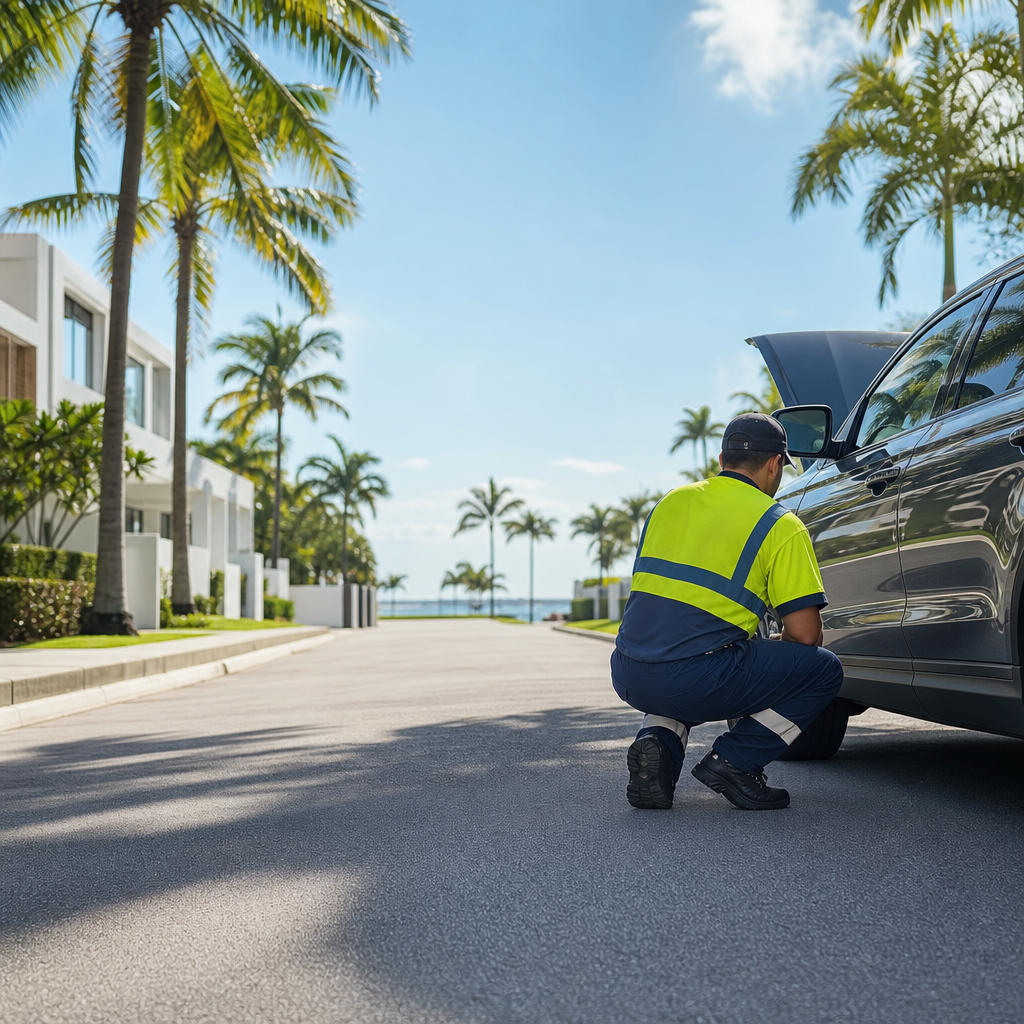
For a non-starting vehicle or a vehicle that needs immediate roadside support, use roadside assistance in West Palm Beach.
Choose a tow when there is any doubt about safe driving
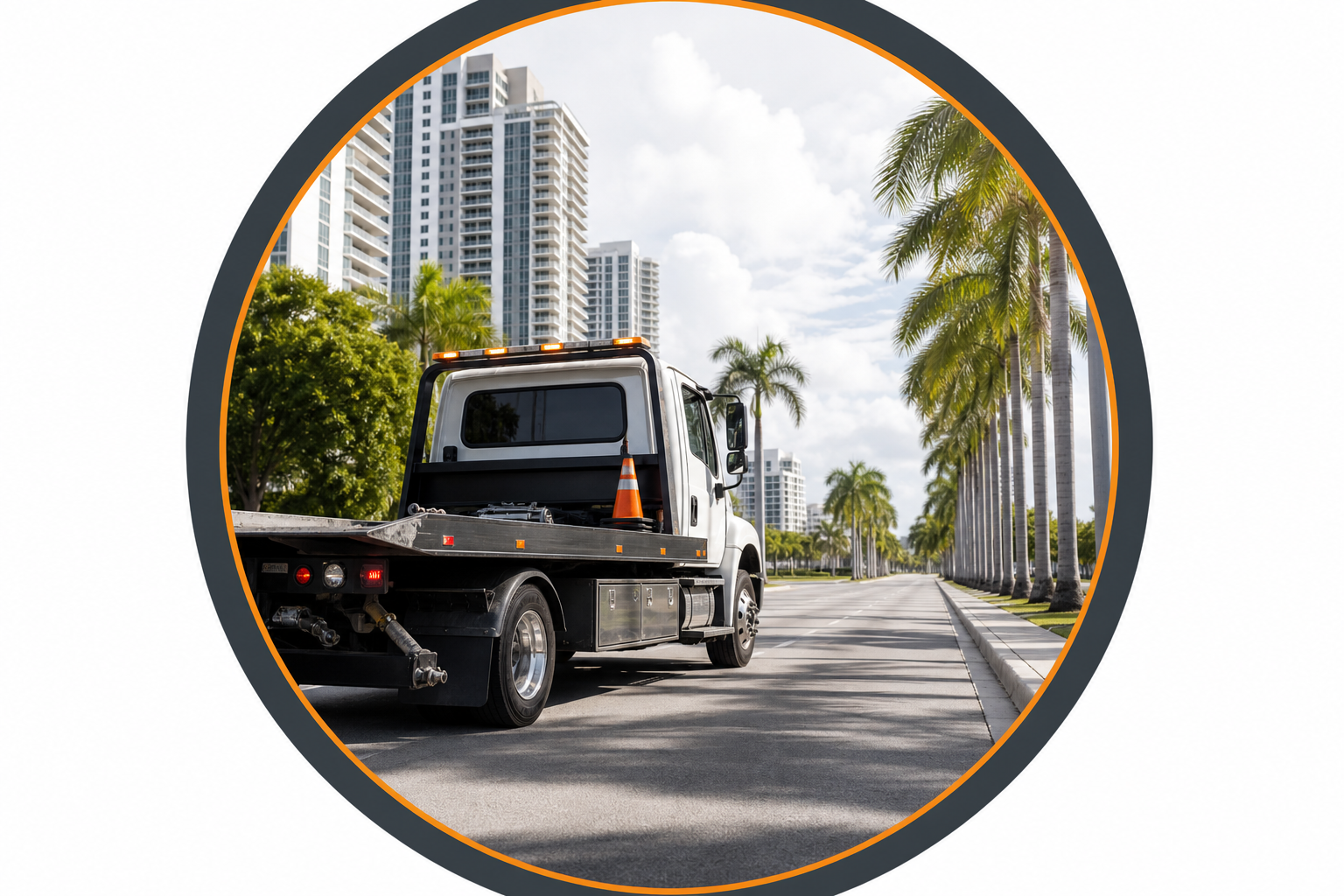
A tow is the better option when the engine temperature climbed high, steam or smoke was visible, coolant or oil appears to be leaking, the check-engine or temperature warning appeared, the vehicle lost power, or you are stopped in a hazardous location. A flatbed can keep the vehicle off its wheels and avoid adding mileage or load to a potentially damaged drivetrain or engine.
For transport to your preferred repair destination, request flatbed towing service. If the issue happens at night, in heavy traffic, or far from home, 24-hour towing can help you avoid attempting an unsafe drive.
Information to Have Ready When You Call
A clear call helps the dispatch team send the appropriate service. You do not need mechanical terminology. Describe what you saw and what the vehicle did.
- Your exact location, direction of travel, and nearby landmark or exit
- Vehicle year, make, model, color, and whether it is safely parked
- Whether you saw white steam, dark smoke, dripping fluid, or flames
- Any dashboard warnings or unusual gauge readings
- Whether the vehicle starts, rolls, or has a flat tire
- Your intended destination, if you need a tow
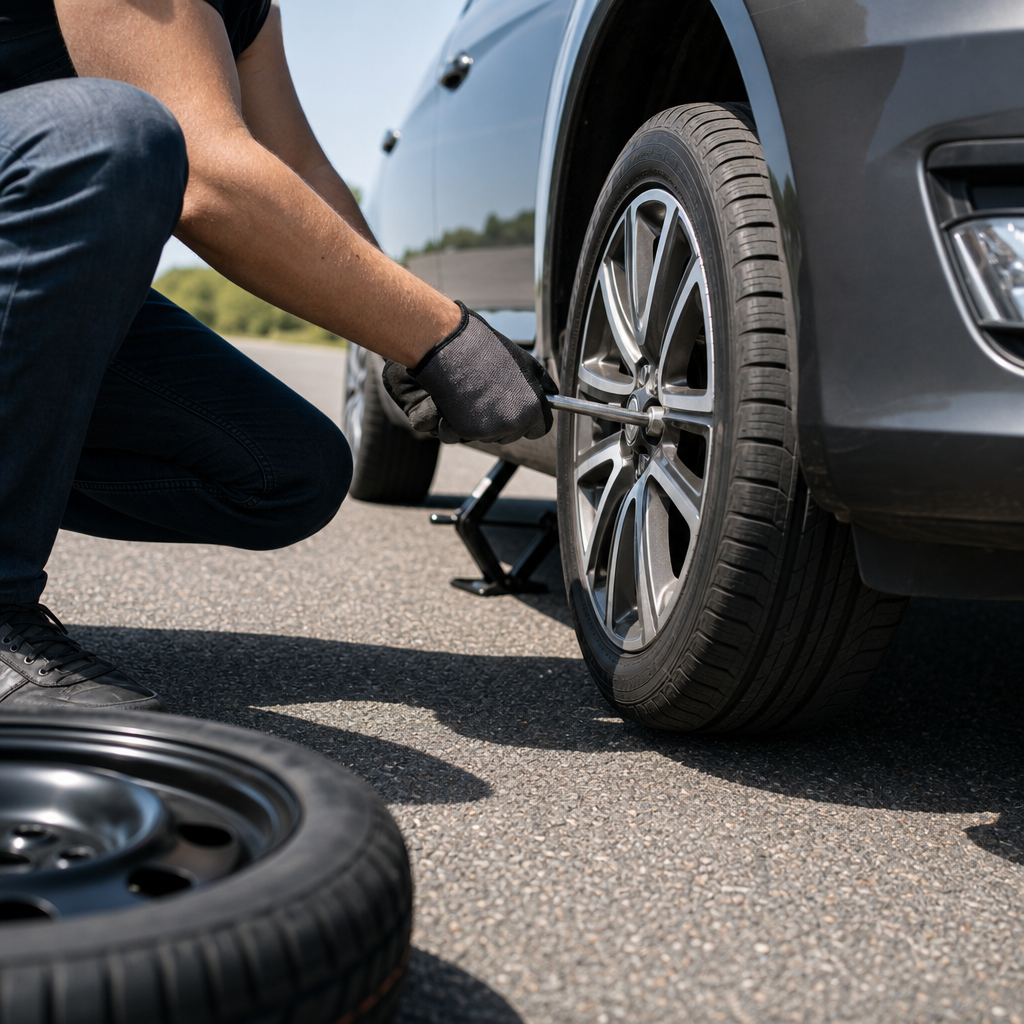
If the vehicle also has a tire problem after hitting debris or a pothole, mention that during the call. A separate flat tire service request may be useful only when the vehicle has no overheating, smoke, or fluid-leak concern. When those symptoms are present, towing is generally the safer path.
Before You Leave the Vehicle
Take your keys, phone, identification, medications, and any essential personal items. If conditions allow, take a quick photo of the dashboard warning lights and the area under the vehicle without crawling underneath it. Those details can help explain the issue later.
Do not stand between your vehicle and traffic, and do not rely on another driver to inspect a hot engine for you. In South Florida heat, a vehicle can remain hot longer than expected, so patience is part of safe roadside decision-making.
Frequently Asked Questions
Can I drive after steam comes from under the hood?
Not until the cause is known and the vehicle is safe to operate. Steam can indicate an overheating or coolant-loss problem. Continuing to drive may cause more damage or leave you stranded in a less safe location.
How long should I wait before opening the hood?
Wait until the engine has had substantial time to cool, and remember that opening the hood does not make it safe to remove a radiator or coolant cap. If you are unsure, leave the hood closed and wait for professional help.
Is white smoke always coolant?
No. White vapor is commonly associated with coolant steam, but appearance alone is not a reliable diagnosis. Treat any unexplained vapor from under the hood seriously, especially if it is paired with a warning light, odor, or high temperature gauge.
What if the temperature gauge returns to normal after I stop?
A normal gauge after stopping does not confirm that the problem is resolved. Cooling down can temporarily hide an overheating condition or leak. Arrange an inspection or tow rather than assuming it is safe to continue driving.
Should I add water to the radiator on the roadside?
Do not add water to a hot cooling system or remove a hot cap. The system may be pressurized, and handling it can cause burns. If the vehicle overheated or lost coolant, towing is often the safer choice.