The highest-risk mistake after a pothole hit is driving on because the tire still holds some air. A tire can look usable while its inner structure, sidewall, wheel, or steering components have been damaged. The safer choice is to stop in the first safe location, inspect only what you can see from outside the vehicle, and request roadside help or a tow if there is any doubt about the tire’s condition.
A pothole impact can turn a routine trip into an immediate towing decision. This guide is built for drivers in West Palm Beach, Florida who need to decide what to do at the curb—not diagnose a vehicle from a driveway.
Right now: use this 60-second stop-or-go check
- Stop driving and call for help if the tire is flat, the sidewall has a bulge or cut, the wheel looks bent or cracked, the steering wheel shakes, the vehicle pulls sharply, or you hear scraping, thumping, or repeated clicking.
- Move only as far as necessary to reach a safer stopping place if you are in an exposed traffic position and the vehicle still steers, rolls, and brakes normally. Keep speed very low and avoid sharp turns.
- Choose a flatbed tow if the wheel or tire is visibly damaged, the vehicle rides unevenly, or you cannot confirm that it is safe to drive.
Before the problem: know what a pothole can damage
Potholes do more than cause flats. A hard edge can pinch the tire between the road and wheel, damaging the tire’s internal cords even if the outer rubber does not immediately split. The impact can also bend a wheel lip, disturb alignment, or damage a component near the wheel. Those problems may not be safe to test by driving farther.
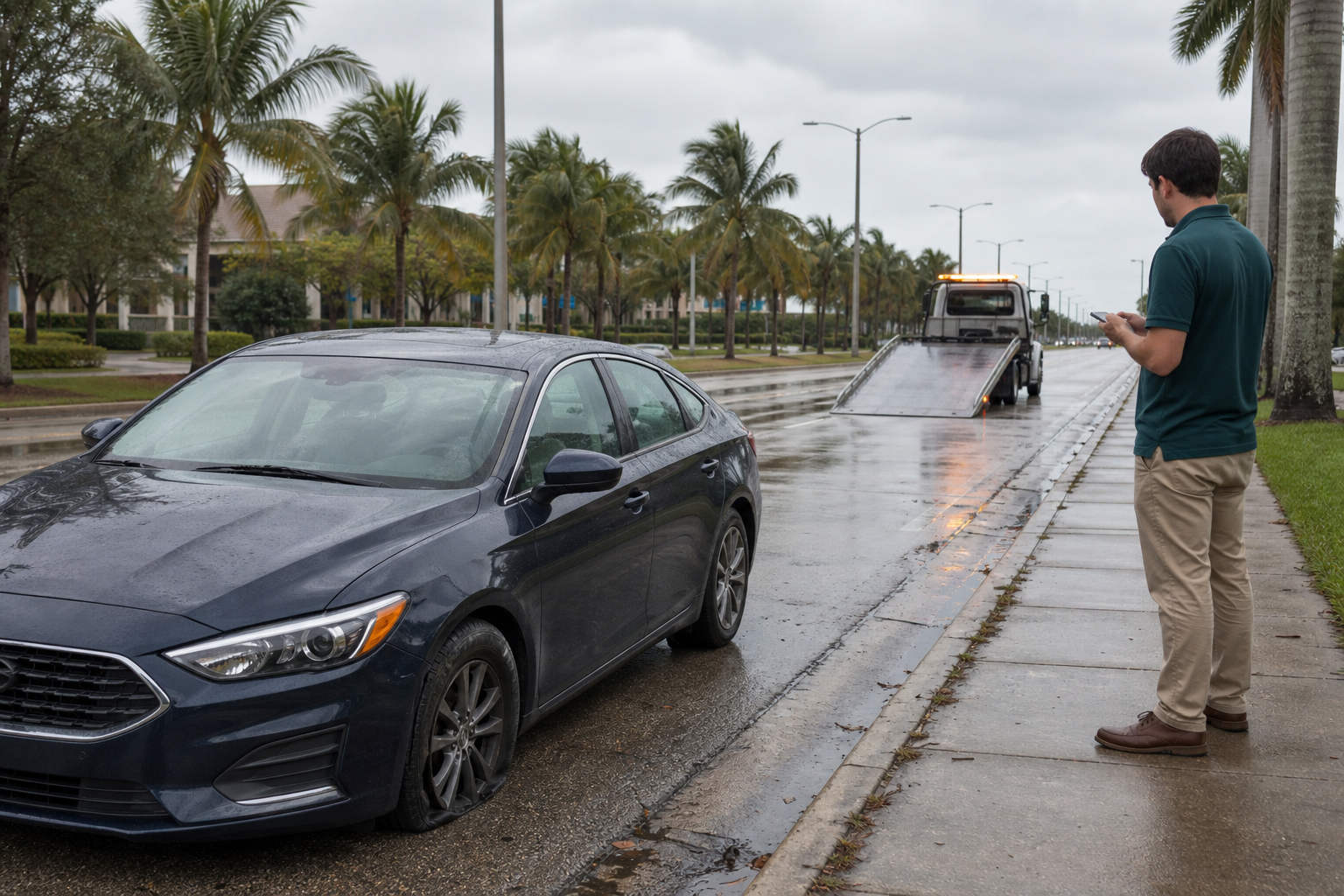
South Florida rain changes the first decision. Standing water can conceal pothole depth, and a pothole strike on wet pavement can be followed by a skid or sudden loss of tire pressure. In rainy conditions, leave more room ahead, avoid abrupt steering corrections, and treat a new vibration or pull as a reason to get off the active travel lane as soon as it can be done safely.
Keep these items accessible before you need them: your vehicle location tools, a charged phone, roadside assistance contact information, and any wheel-lock key used for your vehicle. Do not rely on a tire inflator to make a structurally damaged tire drivable. Adding air can help reveal a leak, but it cannot repair a sidewall injury or bent wheel.
At the roadside: decide if the vehicle stays parked
After the impact, release the accelerator smoothly. Avoid braking hard unless needed to prevent a collision. Hold the steering wheel firmly, signal, and move toward the nearest safer place to stop. A parking area, wide shoulder, or low-traffic side area is preferable to stopping in a live lane. Do not stop in a location that requires you to stand beside moving traffic to inspect the tire.
Do not drive the vehicle if you find any of these signs
- A tire is flat, rapidly losing air, partly off the wheel, or visibly misshapen.
- The tire sidewall has a bubble, blister, deep gouge, split, exposed cords, or a fresh impact tear.
- The wheel rim has a crack, a bent edge, or damage that prevents the tire bead from sealing.
- The vehicle leans toward one corner or the tire is rubbing inside the wheel area.
- The steering wheel is no longer centered, the vehicle pulls strongly, or steering feels loose or unusually heavy.
- You feel pronounced vibration, hopping, wobbling, or a rhythmic thump that began immediately after the pothole.
- A warning light appears along with a handling change, unusual noise, or visible wheel-area damage.
These are not symptoms to “drive slowly and see.” A damaged tire can fail fully after a few more blocks, especially after it heats up. West Palm Beach heat can raise tire temperature quickly, making a weakened tire less predictable under continued driving.
When a roadside tire service may be enough
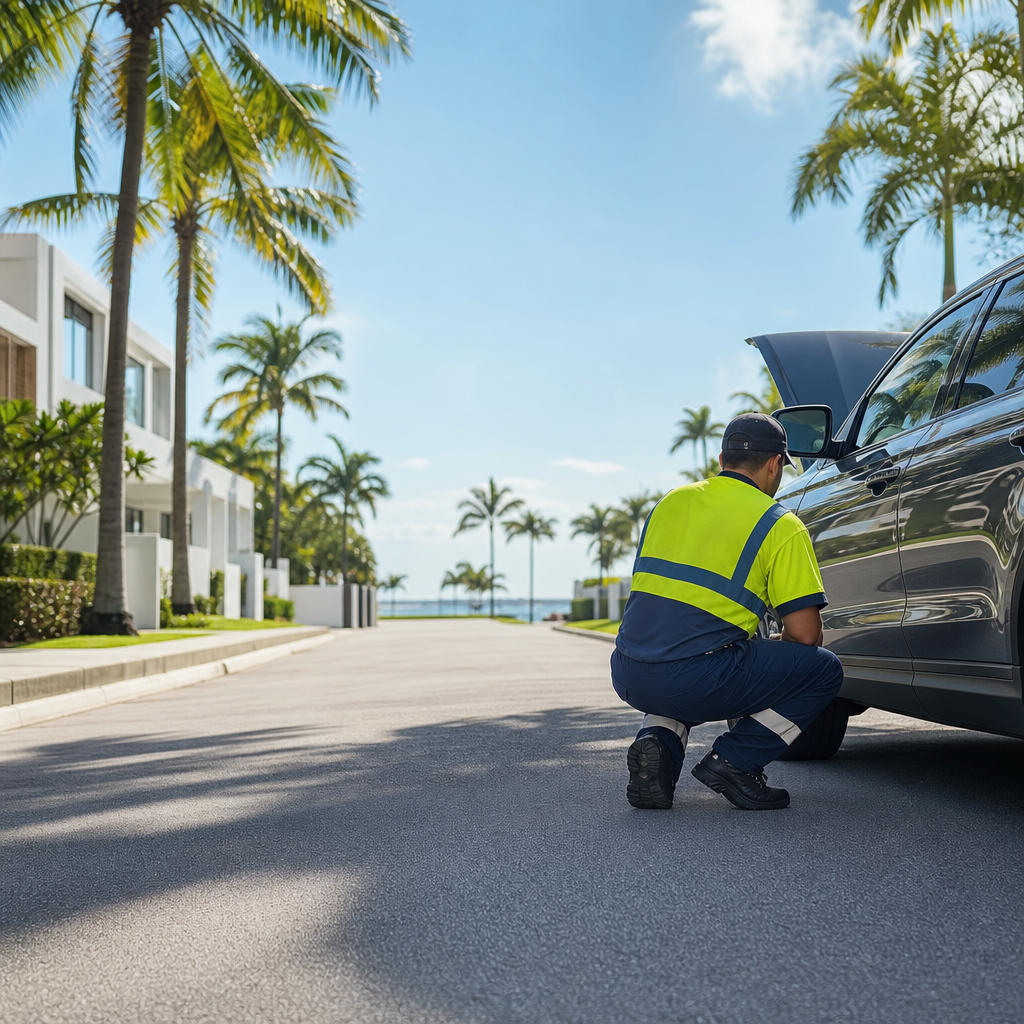
Roadside assistance can be the practical first call when the issue is limited to a flat tire and you have a usable spare, the wheel appears intact, and the vehicle had no pull, shake, scrape, or steering change after the impact. Ask for flat tire service and tell the dispatcher that the flat followed a pothole strike. That detail helps the provider understand that a simple tire change may not be the full answer.
If there is no usable spare, the tire cannot be safely changed where the vehicle is located, or the wheel may be damaged, request towing rather than attempting to continue on a flat tire. Driving even a short distance on a deflated tire can destroy the tire and damage the wheel.
While waiting: protect the scene, not the schedule
Once parked, put the vehicle in park, apply the parking brake if it is safe to do so, and activate hazard flashers. If you can exit safely away from traffic, wait well away from the travel lane and behind a barrier or at a safer distance from the vehicle. If exiting would place you in danger, remain belted inside with the doors locked.
Do not kneel beside the traffic-facing side of the vehicle. Do not reach under the vehicle. Do not place yourself in the roadway to photograph the pothole or inspect the wheel. A photo can wait; your position beside traffic cannot.
What to tell roadside assistance or the tow dispatcher
- Your precise location and the safest available description of where the vehicle is stopped.
- Vehicle year, make, model, color, and whether it is two-wheel drive, all-wheel drive, or four-wheel drive if known.
- Which tire or wheel was affected and whether the tire is flat, low, bulging, cut, or still inflated.
- Any new vibration, pull, steering issue, wheel rubbing, warning light, or noise.
- Whether you have a usable spare and any special access issue, such as a vehicle blocked in a garage or parking area.
Use roadside assistance when the vehicle may be safely handled at the location. Choose flatbed towing when damage may involve more than the tire, the wheel is compromised, or continuing to roll the vehicle could make the damage worse.
After service arrives: make the next decision from the evidence
Show the service provider the affected tire and describe exactly what changed after the impact. Mention if the vehicle drove normally before the pothole and began pulling, shaking, or making noise immediately afterward. That timeline helps separate a simple flat from a likely wheel, tire, or suspension concern.
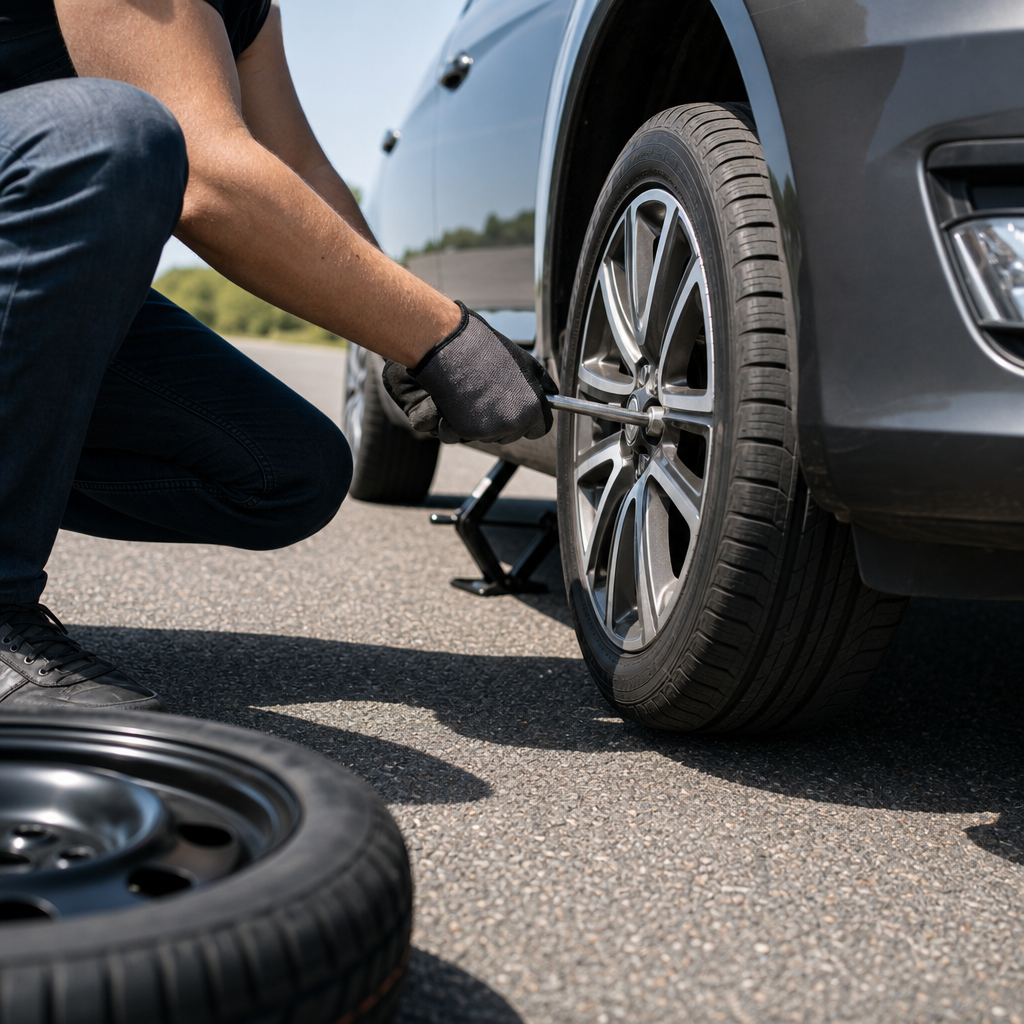
If a spare is installed, treat it as a temporary solution. Do not assume the vehicle is ready for normal highway speed or a long trip just because it moves again. Follow the spare tire’s markings and the vehicle manufacturer’s instructions. If the wheel appears bent, the vehicle still shakes, or the steering is changed after the tire swap, do not continue driving; arrange towing.
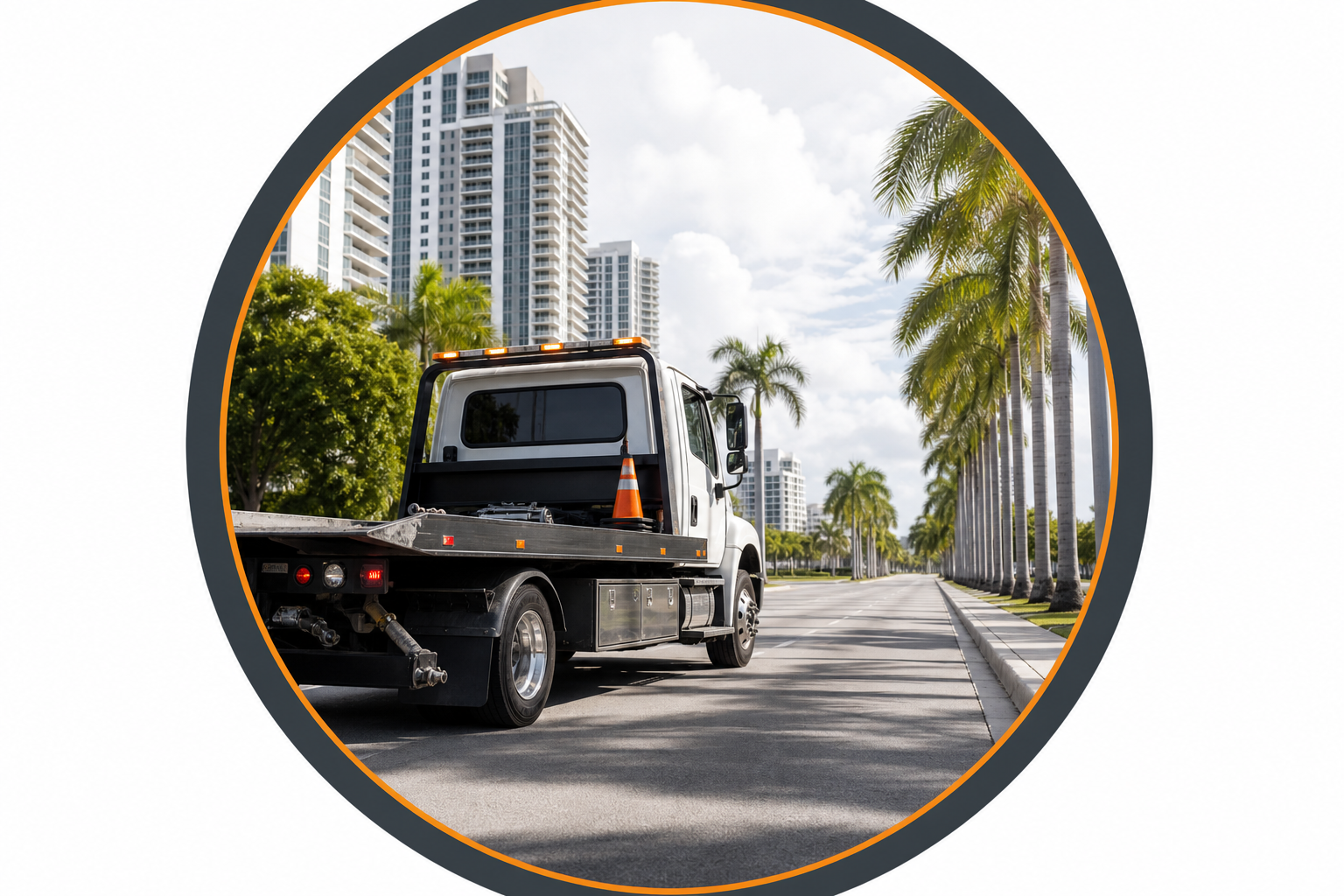
A flatbed is generally the cautious option when the affected corner has visible damage or uncertain drivability. It keeps the vehicle from rolling on a compromised wheel or tire and avoids asking a stressed driver to judge a problem that may not be visible externally.
Choose the call that matches what you see
Flat tire, intact wheel, usable spare, and no handling changes? Request flat tire assistance. Bulge, sidewall cut, bent wheel, vibration, pulling, scraping, or no safe spare? Request 24-hour towing and ask for a flatbed. If you cannot safely inspect the vehicle from where it stopped, treat that alone as a reason to call for help rather than drive onward.
Pothole tire damage FAQs
Can I drive if the tire looks normal after hitting a pothole?
Not automatically. Stop and check for a low tire, sidewall bulge, wheel damage, vibration, pulling, or noise. If any of those are present, do not keep driving. Internal tire damage may not be obvious from a quick glance.
Is a sidewall bulge repairable?
No. A sidewall bulge indicates internal structural damage. Do not drive on it. The tire should be removed from service, and towing or roadside help is the safer choice.
Can I use a spare after pothole damage?
You may be able to use a spare if the spare is usable, the wheel mounting area is not damaged, and the vehicle has no continuing vibration, pull, rubbing, or steering change. If the wheel itself is bent or the vehicle still handles abnormally, arrange a tow.
Why does my car shake after a pothole even though the tire is not flat?
The impact may have damaged the tire internally, bent the wheel, or affected a wheel-area component. A new shake after a pothole is a do-not-drive warning until the vehicle can be assessed.
Should I call for a tow if I am unsure?
Yes. Uncertainty is a valid towing decision when the alternative is driving on a potentially damaged tire or wheel. A brief tow is usually safer than risking a tire failure or loss of control farther from a safe stopping place.