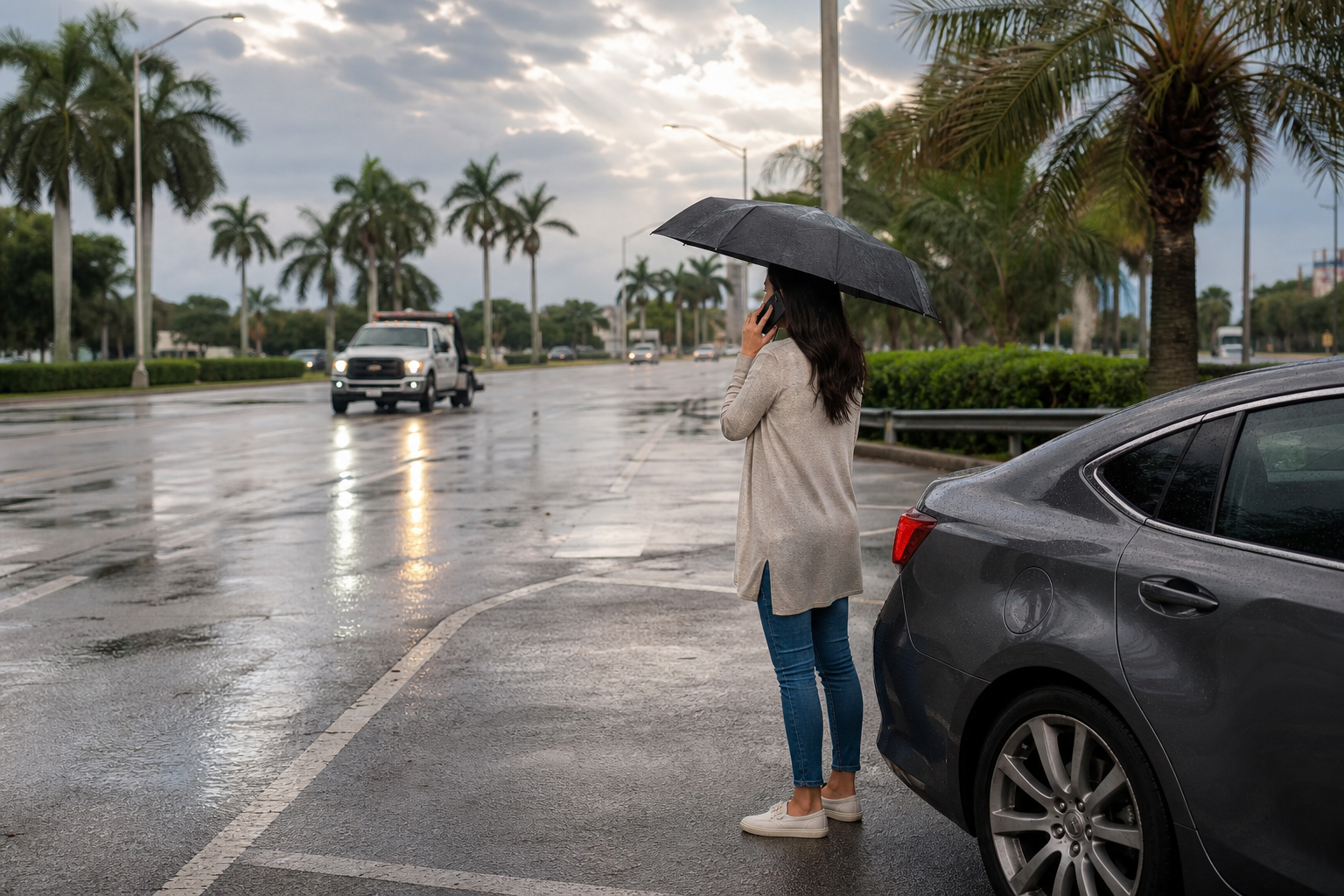
In West Palm Beach, a sudden South Florida downpour can turn a routine low-fuel problem into a visibility problem within minutes. Rain on the windshield, spray from nearby traffic, and a darkened roadway can make a stopped vehicle harder to spot. Heat matters too: a vehicle that is tolerable for a few minutes can become uncomfortable quickly if you are waiting without reliable air conditioning. The best fuel-delivery call starts before the vehicle is fully stopped in an exposed spot.
Do this first: make the call easy to complete
- If the vehicle still has enough momentum, move only to a safer, accessible place off the active travel lane. Do not try to stretch the remaining fuel to reach a better destination.
- Turn on hazard lights after stopping. Keep your phone with you and save battery by closing unnecessary apps.
- Call for roadside assistance once you can state your exact location and fuel type. If the vehicle is stopped in an active lane, you cannot safely remain with it, or there is an immediate collision risk, call 911 first.
A fuel gauge near empty is enough reason to arrange help. Waiting for the engine to stall can remove your ability to reposition the vehicle safely.
Before the problem: save the details you will need under pressure
Fuel delivery goes faster when the caller does not have to search for basic vehicle information on a rainy shoulder or in a hot parking area. Build a small fuel-assistance note in your phone now.
- Vehicle description: year, make, model, color, and license plate number. The plate is especially helpful when several similar vehicles are nearby.
- Fuel requirement: regular unleaded gasoline, premium gasoline, diesel, or another fuel specified by the vehicle. Check the fuel-door label or owner documentation if you are unsure. Never guess.
- Usual fuel-door side: driver side or passenger side. This is not essential to dispatch, but it helps the technician position efficiently after arrival.
- Reliable callback number: use the number on the phone you will keep with you. If a different person is coordinating the call, tell dispatch who is physically at the vehicle.
- Location-sharing readiness: enable phone location services before you need them, but still be prepared to describe the location in words.
Also keep enough charge for a call and return call. In West Palm Beach heat, avoid draining your battery by running accessories unnecessarily after the engine has stopped. If conditions are uncomfortable, prioritize getting occupants to a safe, shaded, or air-conditioned nearby area only if it can be reached without crossing active traffic or leaving the vehicle in a dangerous position.
At the roadside: give the dispatcher a findable location, not just a pin
The dispatcher needs to locate the vehicle from the direction a service vehicle can actually approach. A map pin helps, but it may place you on the wrong side of a divided road, inside a large property, or at an entrance rather than beside the vehicle. Start with your location, then add the access details.
Read this call checklist in order
- Say where you are: provide the street or property name visible to you, plus the nearest cross street, entrance, or clearly marked business name if available.
- Say which side and direction: explain the direction you were traveling, the side of the roadway where the vehicle is stopped, and whether you are before or after an intersection, driveway, or entrance.
- Describe access: state if you are in a parking lot, parking garage, driveway, shoulder, median, turn lane, or another limited-access position. Mention gates, parking-level restrictions, or a narrow area that may affect how a service vehicle reaches you.
- Describe the vehicle: give the year, make, model, color, and plate number.
- State the exact fuel type: say it clearly and repeat it if requested. Do not say only “gas” if the vehicle uses diesel or requires a specific fuel.
- Confirm the fuel issue: explain whether the low-fuel warning is on, the engine has stalled, or the vehicle will not start after running out of fuel.
- Report immediate safety factors: tell dispatch about low visibility from rain, a blocked lane, heavy spray, a vehicle partly exposed to traffic, children or vulnerable passengers, or any reason the technician may have difficulty seeing or reaching you.
If you cannot identify your location, do not invent one. Tell the dispatcher what is visible: street signs, a property entrance, your direction of travel, nearby cross streets, and whether the vehicle is on the left or right side. Keep the call open only as long as needed; follow any instructions about text updates or location sharing.
While waiting: stay reachable and make the vehicle easy to identify
Once the request is placed, avoid creating a second problem by moving repeatedly, walking along an exposed roadway, or trying to restart the engine again and again. Your job is to remain safely reachable and give accurate updates if conditions change.
- Keep hazard lights on when stopped near moving traffic, provided the vehicle’s electrical system permits it.
- Keep the phone charged, audible, and nearby. Answer unfamiliar incoming calls; the technician or dispatcher may need an access clarification.
- If heavy rain begins or intensifies, update dispatch if visibility has changed or water is affecting the stopping area. This can materially change how the technician identifies the vehicle and where it is safest to stop.
- Remain in the vehicle with doors locked when that is the safer option. If staying in the vehicle creates an immediate danger because it is exposed in an active lane, call 911 and follow emergency instructions.
- Do not stand behind, in front of, or on the traffic-facing side of the vehicle. Do not attempt to flag down passing traffic.
- Do not accept fuel from an unknown person or open the fuel door before confirming that the arriving provider is the service arranged through dispatch.
A technician may call to confirm your fuel type, vehicle appearance, or access point. Give the same information you gave dispatch; consistency prevents the provider from searching the wrong side of a roadway or property.
After service arrives: confirm the fuel, then reset the plan
- Confirm the vehicle and exact fuel type before any fuel is added.
- Follow the technician’s instructions about starting the vehicle. Some vehicles may need a moment before restarting after running fully out of fuel.
- Before leaving, verify that the engine is running normally and that you have enough fuel to reach a fueling location without immediately returning to the low-fuel range.
- If the vehicle will not restart, tell the provider exactly what happens when you attempt to start it. The next appropriate step may be flatbed towing rather than additional fuel.
- Update the fuel note in your phone if you discovered the vehicle uses a fuel type you were not fully certain about.
Fuel delivery is the right request when the vehicle is safely accessible and the problem is simply an empty or nearly empty tank. Request towing instead if the vehicle cannot be safely reached for fueling, cannot restart after the proper fuel is delivered, or must be moved from an unsafe position. For a separate roadside problem, see flat tire service or 24-hour towing.
Fuel delivery questions drivers ask
What is the single most useful location detail?
Your exact stopping position relative to traffic or access: the road or property name, direction of travel, and the side where the vehicle is located. A pin without those details can be misleading on divided roads or large properties.
What if I do not know which fuel my vehicle needs?
Check the fuel-door label, owner information, or a reliable vehicle record before authorizing delivery. Do not make a guess based on what another vehicle uses.
Should I call 911 for an empty tank?
Call roadside assistance for a safely stopped, accessible vehicle that needs fuel. Call 911 when there is immediate danger, such as a vehicle stopped in an active lane, a crash risk, or a situation where occupants cannot safely remain at the location.
What should I do if rain starts after I request fuel delivery?
Stay reachable and notify dispatch if rain has made the vehicle harder to see, changed the safe access point, or created a new hazard. Do not relocate unless you can do so safely.